





What's Happening?
Reps. Marie Gluesenkamp Perez and Bruce Westerman have introduced the Veterans Owner-Builders’ Rights Act. This bipartisan legislation aims to expand VA home loans, specifically enabling rural veterans to utilize these loans for building their own homes.
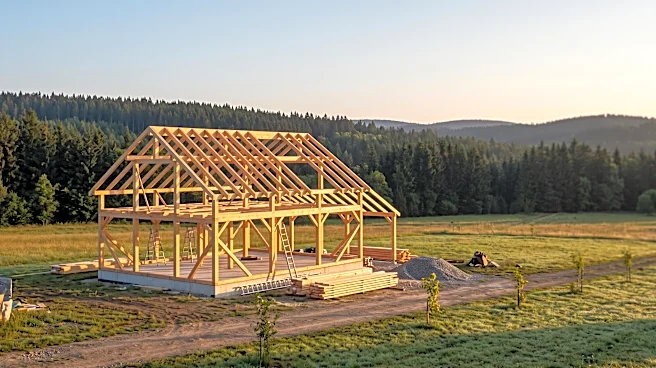
The bill proposes a five-year pilot program under the Department of Veterans Affairs (VA) to provide direct housing loans to veterans in rural areas for new home construction. The initiative seeks to address the shortage of starter homes, particularly in rural communities where housing demand often outpaces construction. Many veterans possess the skills to build homes but currently face limitations in using their VA home loan benefits for such projects. The legislation also includes provisions for blueprints with American wood sourcing requirements, streamlined permitting processes, and technical assistance for veterans, while safeguarding against home-flipping by requiring veterans to reside in the home for at least two years.
Why It's Important?
This legislation is significant for several reasons, primarily addressing housing accessibility and economic empowerment for U.S. veterans. By expanding VA home loan access for owner-builders, the bill offers a new pathway to homeownership, especially crucial in rural areas experiencing housing shortages. This initiative could empower veterans to leverage their skills, build personal wealth, and contribute to the overall housing supply. The focus on American wood sourcing and manufacturing requirements also aims to bolster domestic timber economies, creating a ripple effect of economic benefits. Furthermore, by streamlining the permitting process and providing technical assistance, the bill seeks to remove common barriers that deter veterans from undertaking self-build projects. This could lead to increased homeownership rates among veterans, who currently utilize VA home loans at a rate of only about 30%.
What's Next?
The Veterans Owner-Builders’ Rights Act will now proceed through the legislative process, requiring consideration and potential passage in both the House and Senate. If enacted, the Department of Veterans Affairs would be tasked with establishing and implementing the five-year pilot program for direct housing loans to rural veterans. This would involve developing the necessary infrastructure for loan disbursement, technical assistance, and monitoring the program's effectiveness. Stakeholders, including veterans' advocacy groups like HEVIN, which supports the bill, will likely continue to champion its passage and implementation. The success of the pilot program could lead to its permanent establishment or expansion, potentially influencing future housing policies for veterans and rural development initiatives.
Beyond the Headlines
Beyond its immediate impact on veteran homeownership, this bill touches upon broader societal and economic themes. It highlights the ongoing challenge of housing affordability and availability in the U.S., particularly in rural regions. By empowering veterans to build their own homes, the legislation not only addresses individual housing needs but also promotes self-sufficiency and community development. The emphasis on domestic sourcing for building materials could also stimulate local economies and reduce reliance on foreign supply chains, aligning with broader national security and economic independence goals. Furthermore, the bill implicitly recognizes the value of practical skills possessed by many veterans, offering a mechanism to translate these skills into tangible assets and long-term financial stability, thereby fostering a more resilient and self-reliant veteran community.