
What's Happening?
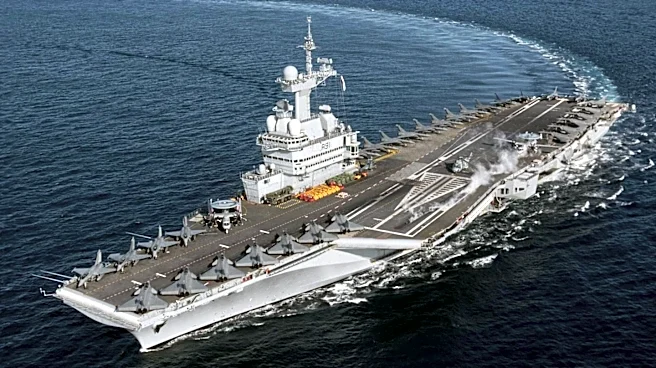
The United States and Japan have joined the Philippines in conducting maritime exercises in the South China Sea, amid ongoing tensions with China. The five-day drills, which included warships, Coast Guard
vessels, and fighter planes, aimed to enhance interoperability among the allies. These exercises are part of a broader effort to counter China's expansive claims in the region. The drills follow recent incidents where Chinese Coast Guard personnel allegedly used force against Filipino seamen and fired water cannons at Philippine government ships. The exercises underscore the enduring partnership between the U.S., Japan, and the Philippines to promote peace and stability in the Indo-Pacific region.
Why It's Important?
The joint drills are a strategic move to assert presence and deter aggressive actions by China in the South China Sea, a region of significant geopolitical importance. The exercises highlight the commitment of the U.S. and its allies to uphold international maritime laws and support regional security. The South China Sea is a critical trade route, and maintaining stability there is vital for global commerce. The drills also reflect the strengthening of military alliances in response to China's territorial claims, which have been a source of regional tension. This collaboration may influence future diplomatic and military strategies in the Indo-Pacific.
What's Next?
The continuation of joint military exercises in the South China Sea is likely, as the U.S. and its allies seek to reinforce their presence and deter further aggression from China. Diplomatic efforts may accompany military actions to address territorial disputes and promote dialogue. The situation could lead to increased military spending and strategic planning among the involved nations. Monitoring of Chinese activities in the region will be crucial, as any escalation could impact international relations and trade. The exercises may also prompt discussions on regional security frameworks and the role of international organizations in conflict resolution.