



What's Happening?
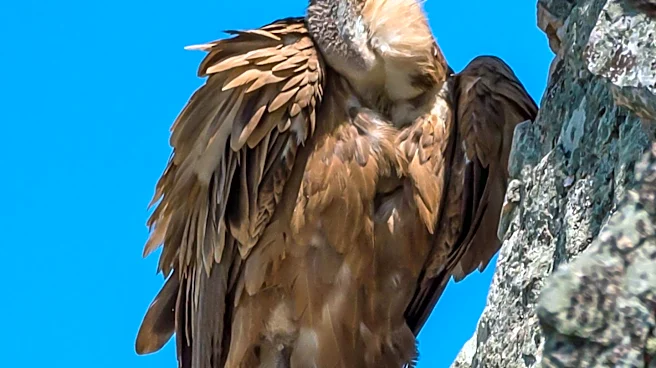
A Ryanair flight departing from Crete, Greece, experienced an 'unprecedented' delay after a large griffon vulture landed on the aircraft's tail fin and refused to move. The incident occurred on August 16 as the plane was preparing for takeoff. Despite
attempts by pilots to scare the bird off by activating tail flaps, the vulture remained. Firefighters were called to the scene, but the bird also resisted their efforts to dislodge it. Firefighter Antonis Petrakis described the situation as unusual, noting the vulture appeared calm and unharmed. He speculated that the bird might have been young and on one of its first flights. Eventually, the vulture moved from the wing to the runway on its own, allowing firefighters to remove it and clear the aircraft for departure.
Why It's Important?
While seemingly a peculiar incident, this event highlights potential aviation safety concerns related to wildlife encounters, particularly with large birds. Bird strikes are a known hazard in aviation, capable of causing significant damage to aircraft engines and structures, and posing a risk to passenger safety. Although this specific incident did not result in a strike, the vulture's presence and refusal to move caused a delay, impacting airline schedules and passenger travel. Crete is home to one of the largest populations of griffon vultures, which can have wingspans up to 9 feet, making them a substantial threat if they collide with an aircraft. This event underscores the ongoing challenge for airports and airlines to manage wildlife in their vicinity to ensure operational safety and efficiency.
What's Next?
The immediate next step for the airline and airport involved was to ensure the safe removal of the bird and the subsequent departure of the flight. In the broader context, incidents like this may prompt airports in regions with high wildlife populations to review and potentially enhance their wildlife management protocols. This could include increased monitoring, improved deterrent systems, or specific procedures for handling large bird encounters on runways or aircraft. For passengers, such delays can lead to missed connections or disruptions to travel plans, emphasizing the unpredictable nature of air travel. The event serves as a reminder for aviation authorities to continuously assess and mitigate risks posed by environmental factors, including local wildlife.
Beyond the Headlines
This incident, while unusual, touches upon the broader ecological balance and human-wildlife interaction in increasingly urbanized and industrialized environments. Griffon vultures, often referred to as 'nature's sanitarians,' play a crucial role in their ecosystem by cleaning carcasses. The presence of such large birds near an airport illustrates the encroachment of human infrastructure into natural habitats, leading to potential conflicts. The event could spark discussions on how to better integrate wildlife conservation with operational safety requirements, especially in areas where endangered or protected species reside near critical infrastructure. It also subtly highlights the resilience of nature, as the vulture, despite human intervention, ultimately moved on its own terms.