






What's Happening?
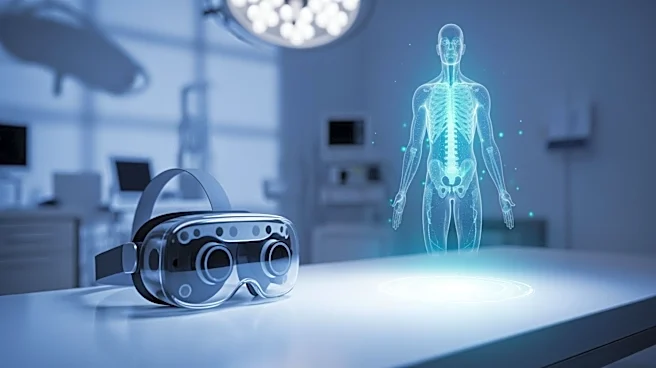
A recent development in the use of augmented reality (AR) for pre-surgical consultations has sparked a debate over its impact on diagnosis delays. At Chelsea and Westminster Hospital, AR technology is being used to provide patients with 3D visualizations
of their anatomy before surgery. This innovation aims to enhance patient understanding and improve informed consent. However, the introduction of AR has highlighted a significant issue: the average diagnostic delay for conditions like endometriosis is approximately 9 years and 4 months. While AR helps patients visualize hidden diseases, it does not address the systemic delays in diagnosis and treatment. The technology has been praised for improving communication between doctors and patients, but critics argue that it may create false reassurance if the underlying issues of referral and scan delays are not addressed.
Why It's Important?
The introduction of AR in medical consultations is significant as it represents a technological advancement in patient care, potentially transforming how patients interact with healthcare providers. By allowing patients to see detailed 3D models of their anatomy, AR can empower them to ask more informed questions and participate actively in their treatment plans. However, the broader impact of this technology is limited by the existing systemic issues in healthcare, such as long wait times for diagnosis and treatment. The debate underscores the need for healthcare systems to not only adopt new technologies but also address fundamental inefficiencies. If AR is to be truly beneficial, it must be part of a larger effort to reduce diagnostic delays and improve access to specialist care.
What's Next?
The future of AR in healthcare will likely involve discussions among policymakers, healthcare providers, and patient advocacy groups about how to integrate this technology effectively. There is a need to balance the adoption of digital tools with efforts to streamline referral processes and reduce wait times for diagnosis. As AR technology becomes more widespread, healthcare systems may need to invest in training for medical professionals and infrastructure to support its use. Additionally, ongoing evaluation of AR's impact on patient outcomes and healthcare efficiency will be crucial in determining its role in future medical practices.
Beyond the Headlines
The use of AR in healthcare raises ethical and practical questions about the role of technology in patient care. While AR can enhance patient understanding, it also highlights disparities in access to timely diagnosis and treatment. The technology's potential to improve patient empowerment must be weighed against the risk of exacerbating existing healthcare inequalities. Furthermore, the reliance on AR could shift focus away from addressing systemic issues, such as the need for more specialists and improved referral systems. As healthcare systems evolve, it will be important to ensure that technological advancements do not overshadow the need for comprehensive healthcare reform.