
What's Happening?
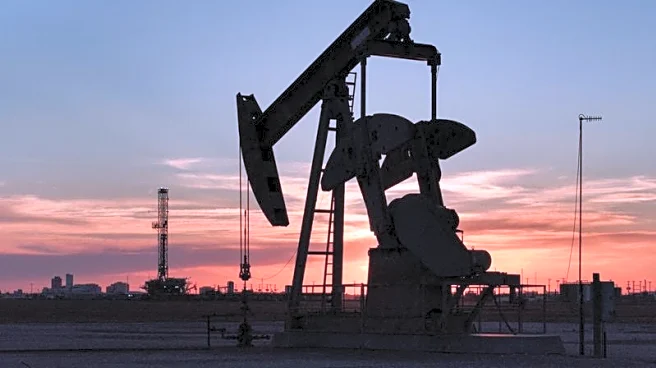
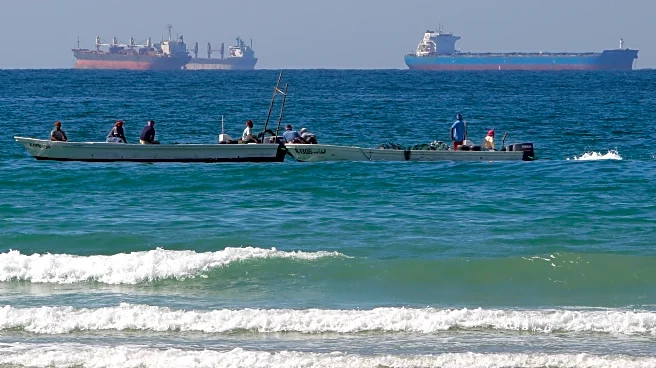
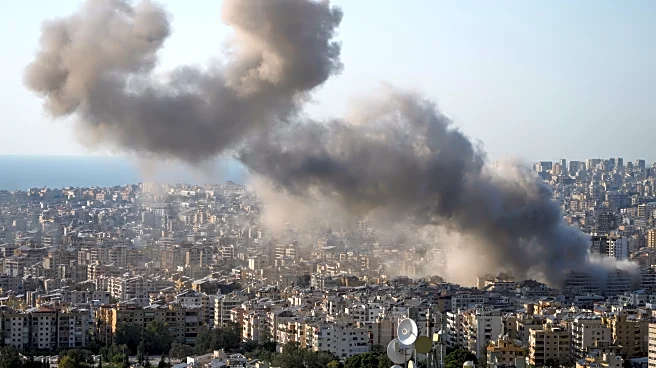
The European Union is facing a significant energy supply challenge due to the ongoing conflict in Iran, which has disrupted global oil and gas markets. European Commission President Ursula von der Leyen has emphasized that returning to Russian energy sources
would be a 'strategic blunder' as the EU seeks to reduce its dependency on Russian oil and gas, a move initiated following Russia's invasion of Ukraine in 2022. The EU has been working to ban Russian energy imports entirely, but the current crisis has led to calls from some European countries, like Hungary, to lift sanctions on Russian energy to alleviate the supply crunch. Meanwhile, Russian President Vladimir Putin has indicated that Russia might preemptively halt energy exports to Europe, aiming to redirect supplies to other markets.
Why It's Important?
The EU's stance on maintaining its strategy to cut off Russian energy is crucial in the context of geopolitical tensions and energy security. The decision to avoid Russian energy is part of a broader strategy to weaken Russia's economic power, which is heavily reliant on energy exports. However, the current energy crisis, exacerbated by the conflict in Iran, poses a significant challenge to this strategy. The potential for increased energy prices and supply shortages could have widespread economic impacts across Europe, affecting industries and consumers. The EU's ability to find alternative energy sources and implement measures to stabilize prices will be critical in maintaining economic stability and political cohesion among its member states.
What's Next?
The EU is exploring various options to mitigate the energy crisis, including state aid measures, power purchasing agreements, and potential subsidies or caps on energy prices. Additionally, G7 energy ministers are meeting to discuss the release of emergency oil stocks held by the International Energy Agency, with a decision expected soon. The outcome of these discussions and the EU's ability to implement effective measures will be pivotal in addressing the immediate energy supply challenges. Furthermore, Russia's potential decision to halt energy exports to Europe could accelerate the EU's efforts to diversify its energy sources and strengthen its energy independence.