


What's Happening?
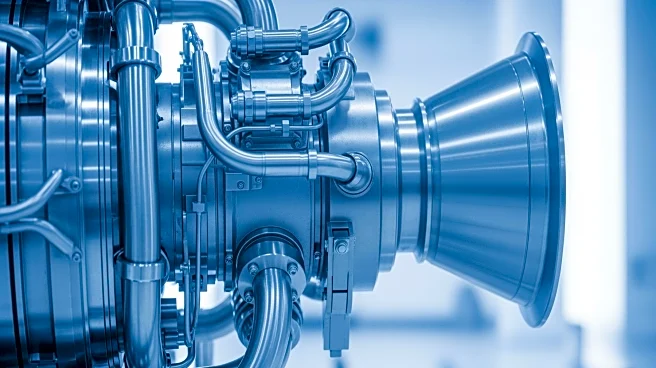
NASA has identified a helium flow blockage as the cause of the delay in the Artemis II mission, which was set to be the first crewed mission to fly by the moon in over 50 years. The blockage was found in the launch vehicle stage adapter, specifically
affecting the interim cryogenic propulsion stage's RL-10 engine. This issue necessitated the rollback of the rocket from the launch pad at Kennedy Space Center to the Vehicle Assembly Building for repairs. The blockage was traced to a seal in the quick disconnect mechanism, which is designed to detach from the rocket during launch. Engineers are currently investigating the cause of the seal's displacement to prevent future occurrences. The Artemis II mission, involving NASA astronauts Reid Wiseman, Victor Glover, Christina Koch, and Canadian astronaut Jeremy Hansen, aims to demonstrate the Orion spacecraft's capability to safely transport humans, setting the stage for future lunar missions.
Why It's Important?
The Artemis II mission is a critical step in NASA's broader goal of returning humans to the moon and eventually establishing a sustainable presence there. Successfully resolving the helium blockage issue is essential for maintaining the timeline of the Artemis program, which is pivotal for U.S. leadership in space exploration. The mission's delay highlights the technical challenges of space travel and the importance of rigorous testing and validation processes. The outcome of this mission will influence future lunar missions, including Artemis III, which is planned to involve a crewed mission close to Earth and potential moon landings in 2028. The ability to address and overcome such technical hurdles is crucial for the credibility and success of NASA's long-term space exploration objectives.
What's Next?
NASA plans to complete repairs and retesting of the Artemis II rocket before rolling it back to the launch pad. The earliest possible launch window is April 1, with backup dates extending to April 6. If these dates are missed, the next opportunity will be at the end of April. The agency is also working on replacing and testing various components, including batteries and seals, to ensure the rocket's readiness. Once the rocket is back at the pad, additional preparations will take about a week and a half before a launch attempt. The successful completion of Artemis II will pave the way for Artemis III, which will involve docking with human landing systems developed by SpaceX and Blue Origin, setting the stage for future moon landings.