
What's Happening?
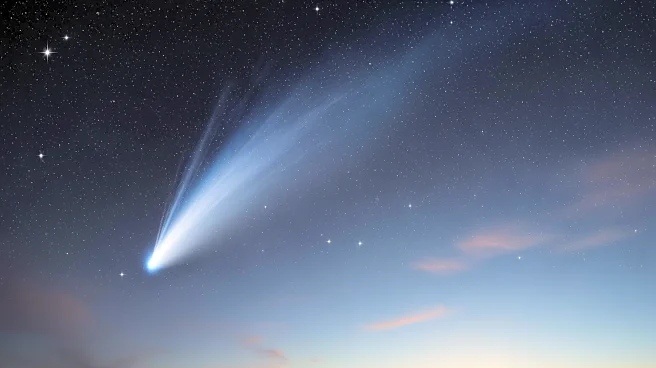
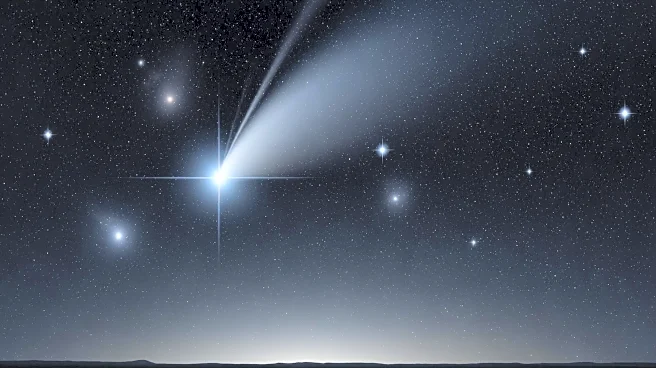
On December 19, 2025, skywatchers are treated to a rare celestial event as interstellar comet 3I/ATLAS makes its closest approach to Earth. This comet, originating from outside our solar system, is passing by at a distance of approximately 168 million
miles. The event coincides with a New Moon, providing optimal dark sky conditions for viewing. The comet is located in the constellation Leo, near the star Regulus, and is best observed with a telescope. This night also features the Ursid meteor shower, adding to the spectacle. The New Moon phase enhances visibility for both the comet and the meteor shower, making it a prime night for astronomical observation.
Why It's Important?
The close approach of comet 3I/ATLAS is significant as it offers scientists a rare opportunity to study material from another star system. Interstellar comets like 3I/ATLAS can provide insights into the composition and formation of distant planetary systems. For amateur astronomers and the general public, this event is a chance to witness a unique astronomical phenomenon. The combination of the comet's flyby, the New Moon, and the Ursid meteor shower creates an ideal scenario for skywatching, potentially inspiring interest in astronomy and science.
What's Next?
Following the comet's closest approach, astronomers will continue to observe and collect data to analyze its composition and trajectory. The Ursid meteor shower will peak on December 21-22, offering further opportunities for skywatching. As the New Moon phase continues, conditions remain favorable for observing other celestial events and objects. The data collected from 3I/ATLAS may contribute to future research on interstellar objects and their impact on our understanding of the universe.