


What's Happening?
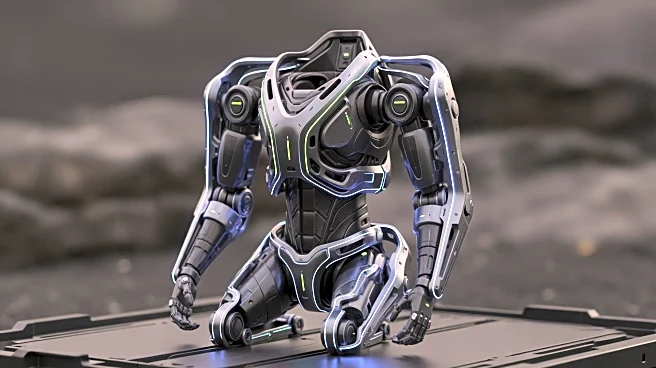
The Ukrainian Armed Forces have become the first military in the world to deploy exoskeletons in combat operations. Soldiers from the 147th Separate Artillery Brigade of the 7th Air Assault Corps are testing Hypershell exoskeletons on the front lines
near Pokrovsk. These devices are designed to reduce physical strain by up to 30%, enabling artillerymen to carry 15-30 shells daily, each weighing up to 50 kg, with less fatigue. The exoskeletons feature assisted movement speeds of up to 20 km/h and an operational range of 17 km on a single battery charge. They also include real-time AI adaptation to user movements and load, making them suitable for both logistics and active combat roles. Initial tests indicate that soldiers can work faster, maintain combat readiness longer, and experience significantly reduced physical exhaustion.
Why It's Important?
The introduction of exoskeletons in military operations marks a significant technological advancement in warfare. By reducing physical strain, these devices can enhance the efficiency and endurance of soldiers, potentially altering the dynamics of combat. This development underscores the increasing role of technology in military strategy, as emphasized by former Ukrainian Army Commander-in-Chief Valerii Zaluzhny, who believes that technological superiority will determine the outcome of conflicts. The use of exoskeletons could provide Ukraine with a strategic advantage in its ongoing conflict, allowing its forces to sustain operations with greater effectiveness and resilience.
What's Next?
As the Ukrainian military continues to test and refine the use of exoskeletons, further integration into broader military operations is likely. The success of these initial tests could lead to expanded deployment across other units and potentially influence other nations to adopt similar technologies. The ongoing conflict in Ukraine may serve as a proving ground for these innovations, with potential implications for future military engagements worldwide. Stakeholders, including military leaders and defense contractors, will likely monitor these developments closely to assess the viability and impact of exoskeletons in combat scenarios.