
What's Happening?
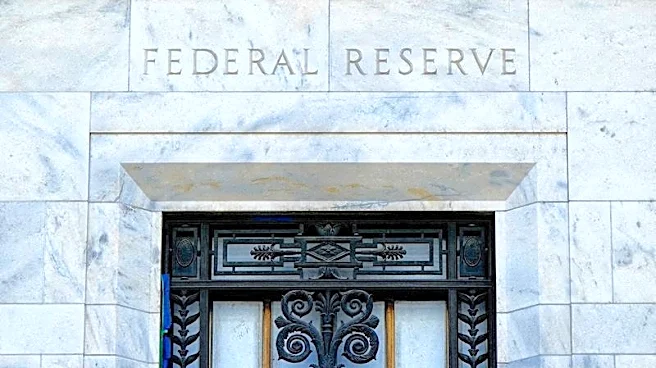
President Donald Trump is set to replace Federal Reserve Chair Jerome Powell with Kevin Warsh, following a prolonged dispute over interest rate policies. Trump has been advocating for a reduction in the
federal funds target rate to 1% or lower, aiming to stimulate corporate borrowing and economic growth. Despite Trump's efforts, Powell has maintained that monetary policy decisions should be based on economic data rather than political influence. The transition in Fed leadership comes as the U.S. faces significant economic challenges, including a $39 trillion national debt and rising federal deficits. Warsh, known for his hawkish stance on price stability, is expected to take over as the 17th head of the Fed after clearing a Senate Banking Committee vote.
Why It's Important?
The change in Fed leadership could have significant implications for U.S. monetary policy and the broader economy. Trump's push for lower interest rates is intended to boost economic activity and ease the burden of national debt. However, the ongoing military conflict with Iran has led to a historic energy supply disruption, causing inflationary pressures that may force the Fed to raise interest rates instead. This potential shift in policy could impact corporate borrowing costs, stock market valuations, and overall economic stability. The outcome of this leadership change will be closely watched by investors and policymakers, as it could influence the direction of U.S. economic policy in the coming months.
What's Next?
Kevin Warsh is expected to assume his role as Fed Chair after May 15, leading a divided Federal Open Market Committee (FOMC). The committee's recent meeting saw significant dissent regarding the direction of interest rate policy. As inflation continues to rise due to the Iran conflict, the FOMC may be compelled to increase rates to stabilize prices. Warsh's historical preference for price stability suggests that he may support such measures, potentially leading to higher borrowing costs. This scenario could challenge Wall Street's expectations of rate cuts and affect stock market dynamics.