









What's Happening?
President Donald Trump has announced a delay in the nomination of Jay Clayton for the position of U.S. intelligence director. This move is intended to pressure Congress into passing the SAVE America Act, a bill that would require voter ID nationwide.
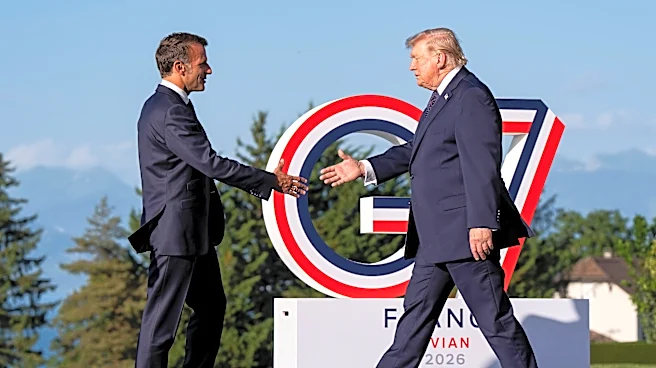
The bill currently lacks sufficient support, particularly from Democrats, to pass through the Republican-controlled Congress. Trump made this announcement while attending the Group of Seven summit in Evian-les-Bains, France. He has linked the approval of a crucial surveillance program, known as FISA, to the passage of the voter ID bill. Trump has accused Democrats of reneging on a deal to renew the surveillance program after he nominated Clayton. He also stated that he does not want to remove Clayton from his current role as U.S. attorney until his replacement is confirmed.
Why It's Important?
The delay in Jay Clayton's nomination highlights the contentious nature of voter ID laws in the United States. President Trump's strategy to link the approval of a surveillance program to the passage of the voter ID bill underscores the political maneuvering involved in legislative processes. The outcome of this situation could have significant implications for voting rights and election security in the U.S. If the SAVE America Act is passed, it could lead to nationwide changes in how voters are identified at the polls, potentially affecting voter turnout and access. The opposition from Democrats suggests a broader debate over voting rights and election integrity, which remains a polarizing issue in American politics.
What's Next?
The next steps involve observing whether Congress will act on the SAVE America Act in response to President Trump's pressure tactics. The delay in Clayton's nomination could lead to further political negotiations and discussions among lawmakers. If the bill gains traction, it may prompt additional debates and potential amendments. The outcome will likely influence future legislative strategies and the balance of power between the executive and legislative branches. Stakeholders, including civil rights groups and political leaders, may intensify their advocacy efforts either in support of or against the proposed voter ID requirements.