
What's Happening?
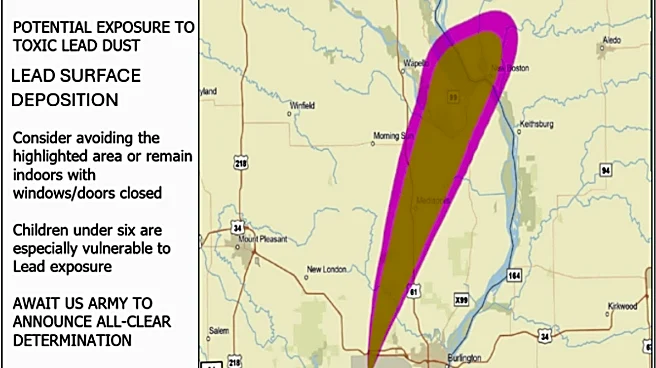
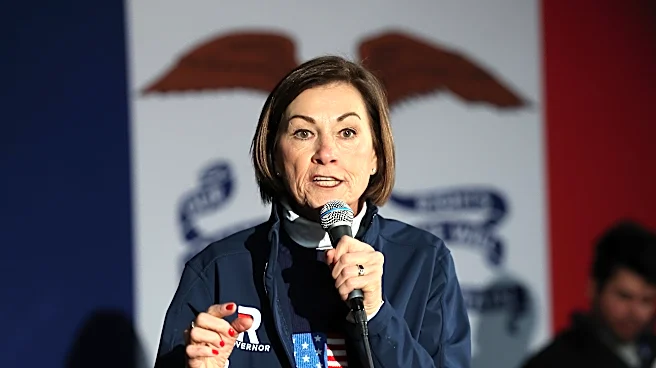
Governor Kim Reynolds announced that she successfully requested a delay in the planned detonation at the Iowa Army Ammunition Plant. The Governor communicated directly with Acting Secretary of the Army Adam
Telle to express her concerns and make the request. Following their discussion, Acting Secretary Telle agreed to postpone the detonation. Governor Reynolds expressed gratitude for this decision, indicating a positive outcome from her intervention. The specific reasons for the delay request or the original purpose of the detonation were not detailed in the statement, but the Governor's involvement highlights a direct engagement with federal military authorities regarding operations within Iowa.
Why It's Important?
This development is important as it demonstrates the active role of state leadership in overseeing and influencing federal operations within their jurisdiction, particularly concerning matters that could have local impact. The Iowa Army Ammunition Plant is a significant federal facility, and any detonation activities could raise environmental, safety, or community concerns. Governor Reynolds's intervention underscores the principle of state-federal cooperation and the governor's responsibility to advocate for the interests of Iowa residents. The delay provides an opportunity for further assessment, communication, or adjustments to the planned activity, potentially mitigating any unforeseen risks or addressing local concerns that may have prompted the Governor's request. It also sets a precedent for how state executives can engage with high-level federal officials on localized issues.
What's Next?
While the statement confirms a delay, it does not specify the duration of the postponement or any new timeline for the detonation. It is likely that further discussions will occur between the Governor's office, the Iowa Army Ammunition Plant, and the Department of the Army to determine the next steps. This could involve a review of the detonation plans, an assessment of potential impacts, or the implementation of additional safety measures. Stakeholders, including local communities and environmental groups, may anticipate more detailed information regarding the revised schedule and any mitigating actions. The Governor's office may also continue to monitor the situation closely to ensure that any future activities align with state and local interests.
Beyond the Headlines
The Governor's intervention in a federal military operation, even if temporary, highlights the complex interplay between state and federal governance. Such actions can reflect broader concerns about environmental stewardship, public safety, and the autonomy of states in matters affecting their citizens. It also brings to light the potential for local impacts from federal installations and the necessity for transparent communication and collaboration between different levels of government. This event could prompt a closer examination of protocols for federal activities within state borders and potentially lead to enhanced coordination mechanisms to address community concerns proactively. The outcome also reinforces the idea that state leaders can effectively leverage their authority to influence federal decisions that directly affect their constituents.