




What's Happening?
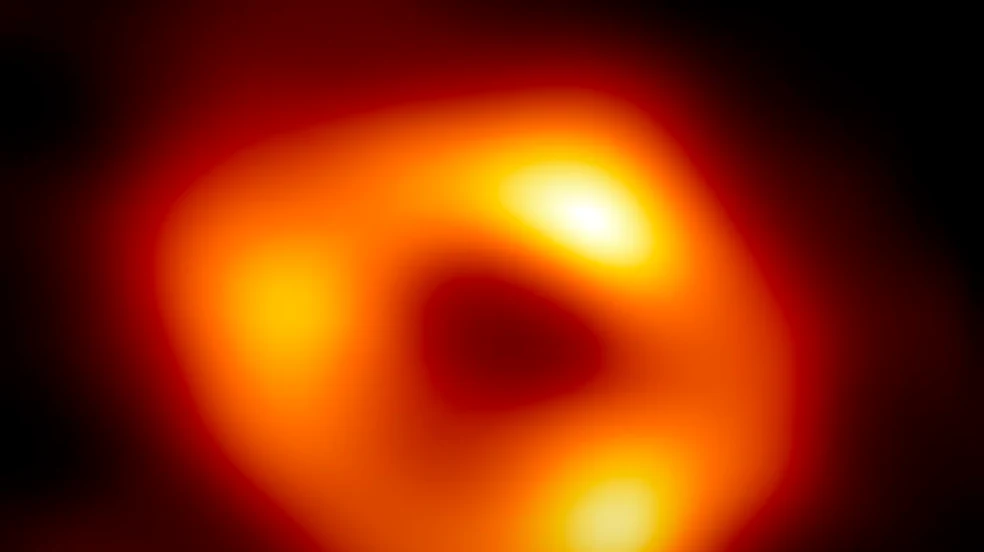
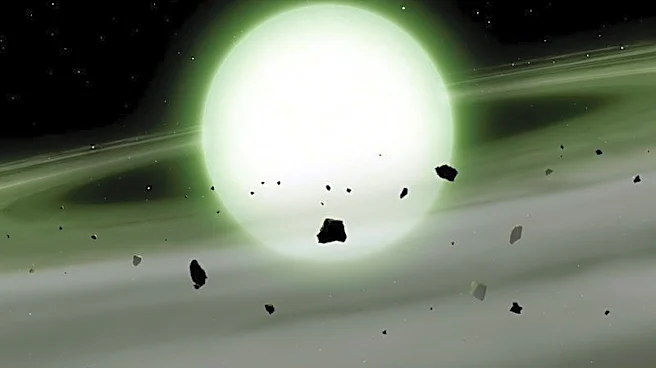
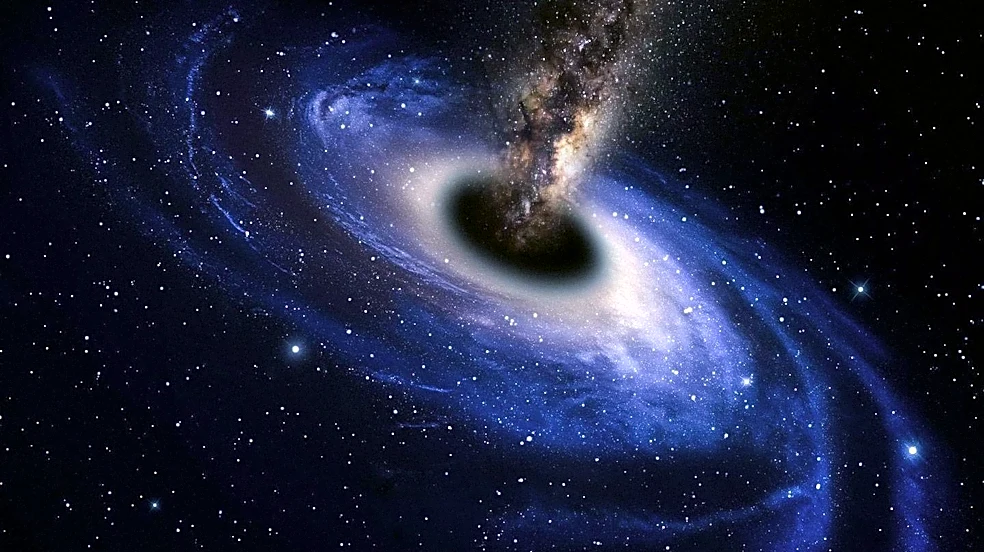
New simulations indicate that supermassive black holes, particularly during active phases, can destroy habitable worlds by emitting powerful galactic winds. These winds, composed of energetic particles, can heat the upper layers of a planet's atmosphere,
accelerating the loss of gases into space and significantly depleting the ozone layer. The ozone layer is crucial for shielding planetary surfaces from harmful ultraviolet radiation. While black holes are often depicted as cosmic vacuum cleaners, their gravitational influence is similar to any massive object when calm. However, when a black hole actively consumes large amounts of gas and dust, forming an active galactic nucleus, it releases immense radiation and these destructive galactic-scale particle winds. The simulations show that the most energetic winds are the most damaging, with effects potentially extending thousands of light-years from the galactic center. This suggests that the traditional concept of a 'habitable zone' around a star may not be sufficient, as the galactic environment, particularly the activity of its central black hole, plays a critical role in a planet's long-term habitability.
Why It's Important?
This research significantly broadens the understanding of planetary habitability beyond the immediate stellar environment. Previously, the focus for identifying potentially habitable worlds was primarily on the 'habitable zone' around a star, where liquid water could exist. However, these findings introduce the concept of a 'galactic habitable zone,' emphasizing that the broader galactic context, especially the activity of supermassive black holes, is equally vital. The erosion of planetary atmospheres and destruction of ozone layers by galactic winds could render planets uninhabitable, even if they are within their star's habitable zone. This has profound implications for astrobiology and the search for extraterrestrial life, suggesting that many planets previously considered candidates for life might not be viable due to their proximity to active galactic nuclei. It also highlights the dynamic and potentially destructive nature of galactic centers, challenging previous assumptions about the long-term stability required for life to evolve.
What's Next?
Future research will need to incorporate additional factors into these models, such as the effects of X-ray and ultraviolet radiation emanating from galactic nuclei. Scientists will also need to investigate the recovery mechanisms of planetary atmospheres, including processes like volcanic outgassing, which could potentially replenish lost atmospheric components. The current models are simplified, and a more comprehensive understanding will require accounting for these complex interactions. The findings suggest a shift in the methodology for identifying habitable exoplanets, moving towards a more holistic approach that considers both the stellar and galactic environments. This will likely lead to a re-evaluation of existing exoplanet candidates and a refinement of criteria for future searches, potentially narrowing down the number of truly habitable worlds.
Beyond the Headlines
The study's implications extend beyond the scientific community, influencing our philosophical understanding of life's prevalence in the universe. If galactic winds from supermassive black holes are as destructive as suggested, the conditions for complex life might be far rarer than previously imagined. This introduces a new layer of complexity to the Fermi paradox, which questions the apparent contradiction between the high probability of extraterrestrial life and the lack of observable evidence. The research also underscores the interconnectedness of cosmic phenomena, demonstrating how events on a galactic scale can directly impact the potential for life on individual planets. It challenges the anthropocentric view of habitability, reminding us that the universe is a dynamic and often hostile environment, where even seemingly stable regions can be profoundly affected by distant, powerful forces.