
What's Happening?
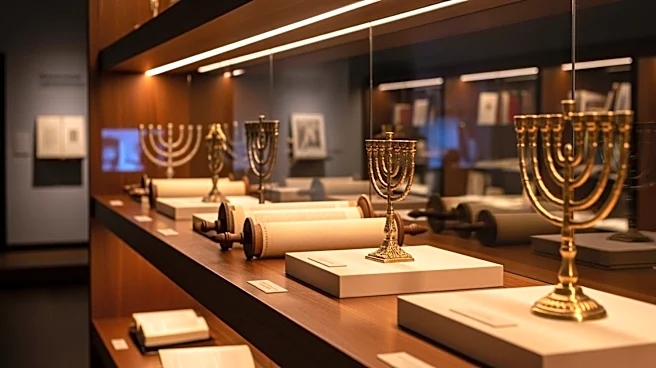
Following the death of Deborah Brodie, a Maryland teacher, her extensive collection of over 200 Jewish ritual objects has found a new home at the Lillian and Albert Small Capital Jewish Museum. Brodie, who
was known for using her collection as a hands-on classroom for Hebrew school students with special needs, amassed items such as menorahs, seder plates, and kiddush cups over 35 years. The collection will be displayed at the museum, allowing visitors to interact with the objects, continuing Brodie's legacy of education and engagement. The museum plans to photograph the collection for online access and lend pieces to local schools and organizations.
Why It's Important?
The relocation of Brodie's Judaica collection to the Capital Jewish Museum is significant for preserving cultural heritage and promoting Jewish education. It ensures that Brodie's legacy of hands-on learning and community engagement continues, providing educational opportunities for future generations. The collection's new home at the museum highlights the importance of cultural preservation and the role of museums in fostering understanding and appreciation of diverse traditions. It also underscores the value of community support in finding meaningful ways to honor and sustain cultural legacies.
What's Next?
The Capital Jewish Museum plans to install the collection in its Community Action Lab, where it will be accessible to visitors and used for educational purposes. The museum will also photograph the collection for online access, expanding its reach and impact. The installation is expected to take place in the summer, with a plaque honoring Brodie and her partner, Jay Brill. The museum's efforts to preserve and promote the collection may inspire other institutions to seek out and display similar cultural artifacts, enhancing public understanding and appreciation of Jewish heritage.
Beyond the Headlines
The story of Brodie's collection highlights the broader cultural and ethical dimensions of inheritance and preservation. It raises questions about the responsibilities of individuals and communities in preserving cultural heritage and the role of museums in facilitating this process. The successful relocation of the collection serves as a model for how communities can come together to honor and sustain cultural legacies, emphasizing the importance of collaboration and support in preserving cultural identity.