






What's Happening?
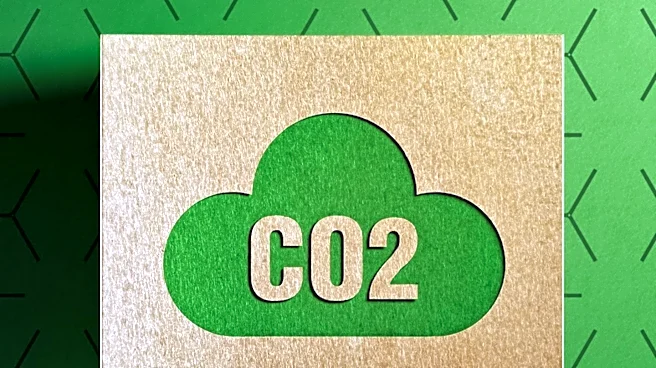
The Centre for Research on Energy and Clean Air (CREA) has released early estimates indicating that the European Union's CO2 emissions from fossil-fuel combustion fell by only 0.8% in 2025. This reduction leaves emissions 4% above the level required to
meet climate targets. CREA's EU CO2 Emission Tracker uses Eurostat energy data and IPCC emission factors to estimate emissions, incorporating faster indicators like power generation and gas flows when recent data is incomplete. The report highlights the trade-off between timely publication and potential revisions, emphasizing the importance of early estimates for public and policy debate.
Why It's Important?
The findings underscore the EU's struggle to meet its climate commitments, highlighting the need for more aggressive policies to reduce fossil-fuel emissions. The report serves as a critical tool for policymakers, researchers, and campaigners to assess progress and scrutinize policy outcomes. The EU's inability to significantly reduce emissions could impact its leadership role in global climate initiatives and affect its economic and environmental strategies. The data also provides insights into the effectiveness of current policies and the need for adjustments to achieve long-term sustainability goals.
What's Next?
As more complete data becomes available, CREA will update its estimates, potentially influencing policy decisions and public discourse. The EU may face increased pressure to implement stricter regulations and invest in renewable energy sources to align with climate targets. Stakeholders, including environmental groups and policymakers, are likely to use these findings to advocate for more robust climate action. The report may also prompt discussions on the EU's role in global climate negotiations and its commitment to international agreements.
Beyond the Headlines
The report highlights the challenges of balancing timely data publication with accuracy, emphasizing the importance of transparency in emissions reporting. It also raises questions about the EU's reliance on fossil fuels and the need for a comprehensive transition to renewable energy. The findings could influence public perception of the EU's environmental policies and its ability to lead by example in the fight against climate change. The report may also impact investor confidence in the EU's energy sector, affecting economic growth and sustainability efforts.