

What's Happening?
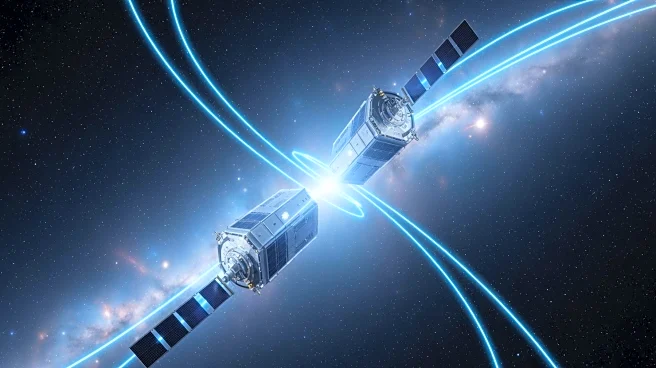
A recent analysis highlights the increasing risk of satellite collisions in Earth's orbit due to the rapid expansion of satellite constellations, particularly SpaceX's Starlink. The number of satellites has surged from 4,000 to nearly 14,000 in the past
seven years, with SpaceX's Starlink alone accounting for over 9,000 satellites in low Earth orbit. This growth necessitates frequent collision avoidance maneuvers to prevent crashes that could generate debris and render parts of Earth's orbit unusable. Researchers have developed a metric called the CRASH Clock to quantify this risk, revealing that a collision could occur in just 2.8 days if satellites lost maneuverability, a significant decrease from 121 days in 2018.
Why It's Important?
The increasing density of satellites in orbit poses significant challenges for space safety and sustainability. The potential for collisions not only threatens the operational integrity of existing satellites but also risks creating debris fields that could hinder future space activities. This situation underscores the need for improved space traffic management and international cooperation to mitigate collision risks. The expansion of satellite constellations by companies like SpaceX, Amazon, and others could exacerbate these challenges, highlighting the urgency for regulatory frameworks to ensure the long-term viability of space operations.
What's Next?
As more satellites are launched, the CRASH Clock metric is expected to decrease further, indicating a higher likelihood of collisions. This trend may prompt regulatory bodies and space agencies to implement stricter guidelines for satellite launches and operations. Additionally, there may be increased investment in technologies for debris removal and collision avoidance. Stakeholders, including governments and private companies, will need to collaborate on developing comprehensive strategies to address the growing risks associated with crowded orbits.