





What's Happening?
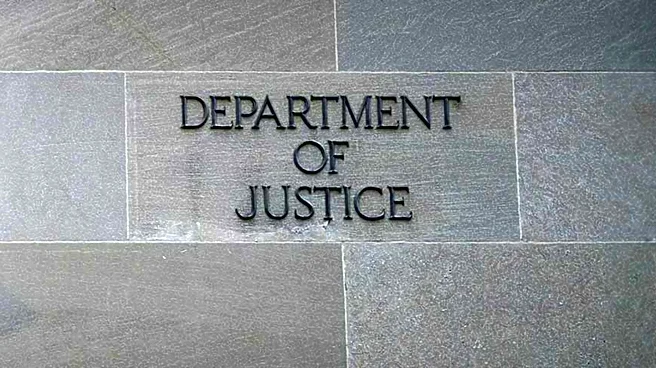
The U.S. Department of Justice (DOJ) has issued an opinion to the Department of State’s Legal Advisor, asserting that the unchecked power of the Foreign Service Grievance Board (FSGB) over the U.S. Foreign Service is unconstitutional. Assistant Attorney
General T. Elliot Gaiser stated that this advice restores the essential through-line of accountability for American foreign policy, flowing from the people to the foreign service through the President and the Secretary of State. Since 1980, the Foreign Service Act had granted the FSGB the authority to overturn disciplinary actions and reinstate Foreign Service members, even those terminated by the Secretary of State. A notable example from 2013 involved the Board reinstating a member who had been fired for downloading pornography on a government computer, a decision that neither the President nor the Secretary of State could overrule. The Office of Legal Counsel's opinion, signed by Assistant Attorney General Gaiser, concludes that these statutory provisions granting the FSGB final decision-making authority violate Article II of the Constitution and are therefore unenforceable. The DOJ emphasizes that political accountability, as outlined in the Constitution, mandates presidential control over the Executive Branch, especially in foreign policy matters. Consequently, final decision-making power must be vested in a presidentially accountable Executive Branch officer, specifically the Secretary of State.
Why It's Important?
This DOJ opinion is a significant development for the structure and accountability of U.S. foreign policy. By asserting presidential control over the Foreign Service Grievance Board, the administration aims to consolidate executive authority and ensure that foreign policy decisions and personnel management align with the President's agenda. This move addresses a long-standing concern about the FSGB's ability to operate independently, potentially undermining the authority of the Secretary of State and, by extension, the President, in managing the Foreign Service. The opinion underscores the principle of political accountability, arguing that the President, as the elected official responsible for conducting foreign affairs, must have ultimate control over the Executive Branch. For the Department of State, this means the Secretary will now have final say on grievance decisions, potentially leading to more consistent and politically aligned personnel outcomes. This could enhance the President's ability to implement foreign policy directives without internal resistance from an independent board. Conversely, some may argue that an independent grievance board serves as a crucial check on executive power, protecting Foreign Service members from arbitrary or politically motivated disciplinary actions. The shift could therefore be seen as centralizing power and potentially reducing protections for career diplomats.
What's Next?
Going forward, the Department of Justice has advised that the Foreign Service Grievance Board (FSGB) can continue to hear grievances, but the Secretary of State will now hold the final decision-making authority. This change effectively reconfigures the power dynamics within the Department of State regarding personnel matters. The immediate consequence will be that the Secretary of State, as a presidentially accountable officer, will have the ultimate say on whether disciplinary measures are upheld or overturned. This could lead to a more streamlined and politically aligned approach to managing the Foreign Service. It is likely that the Department of State will implement new procedures to reflect this shift in authority, ensuring that all grievance processes culminate in a decision by the Secretary. This could also prompt a review of past FSGB decisions and potentially influence future disciplinary actions. Stakeholders, including Foreign Service officers and their unions, may react to this change, potentially seeking clarification on their rights or challenging the new structure. The long-term implications could involve a more direct link between the administration's foreign policy objectives and the composition and conduct of the Foreign Service.
Beyond the Headlines
This legal opinion delves into the fundamental constitutional principle of separation of powers and the extent of presidential authority over the Executive Branch. The DOJ's conclusion that Article II requires presidential control over the Foreign Service Grievance Board highlights a broader effort to reinforce the President's executive power, particularly in areas deemed critical to national interest like foreign policy. This move could set a precedent for re-evaluating the independence of other quasi-judicial or independent boards within the Executive Branch. The ethical dimension concerns the balance between ensuring accountability and efficiency in government operations versus protecting civil servants from political interference. While the administration argues for greater accountability to the elected President, critics might contend that such centralization of power could politicize the Foreign Service and undermine its professional independence. This development also underscores the ongoing tension between career civil servants and political appointees, and the mechanisms designed to mediate their interactions. The long-term impact could be a more politically responsive Foreign Service, but also potential concerns about the erosion of merit-based protections and the potential for increased politicization of diplomatic roles.