


What's Happening?
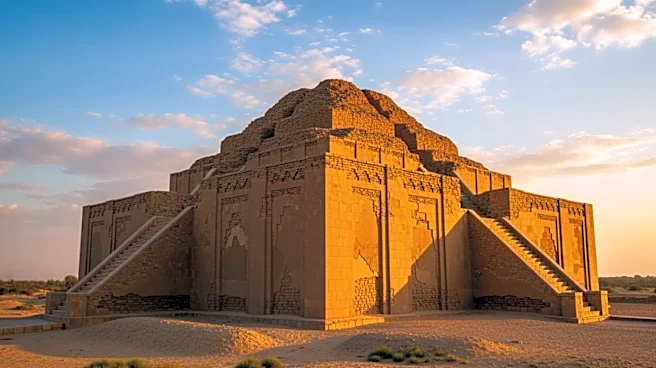
Iraq has embarked on a significant restoration project for the ancient Ziggurat of Ur, a 4,000-year-old temple, to combat the threats posed by climate change. The initiative, reported by Shafaq News, involves using locally made bricks and traditional
building methods to restore the temple's first level, its three main staircases, and repair cracks on the second level. The project also includes reconstruction work on the third level based on archaeological evidence. This marks the seventh major restoration effort since the ziggurat's construction under the Third Dynasty of Ur around 2112 BCE. The restoration is expected to be completed by July 2026. The site, originally built in honor of the Mesopotamian moon god Nanna, faces erosion due to harsh weather conditions, increasing soil salinity, and wind and sand dunes. The Iraqi government has allocated an initial budget of $382,000 for the restoration.
Why It's Important?
The restoration of the Ziggurat of Ur is crucial for preserving one of the best-preserved examples of ancient Mesopotamian architecture. The site is not only a significant cultural and historical landmark but also a potential driver for tourism in Iraq. The restoration efforts highlight the broader challenges faced by archaeological sites worldwide due to climate change, emphasizing the need for sustainable conservation practices. The project also underscores Iraq's commitment to preserving its cultural heritage, which could enhance its global cultural standing and potentially boost economic benefits through increased tourism. The involvement of local archaeologists and traditional methods in the restoration process reflects a dedication to maintaining historical authenticity.
What's Next?
Following the completion of the Ziggurat of Ur restoration, Iraq plans to advance a second preservation effort for the Taq Kasra site in Baghdad, supported by Italy. This initiative aims to treat structural cracks and preserve the landmark in line with international conservation standards. The ongoing restoration projects may prompt further international collaborations and funding opportunities, enhancing Iraq's capacity to protect its cultural heritage. Additionally, regular maintenance of the Ziggurat of Ur is anticipated to prevent future deterioration, ensuring its preservation for future generations.
Beyond the Headlines
The restoration of the Ziggurat of Ur raises important questions about the intersection of cultural heritage preservation and climate change. As climate conditions continue to threaten historical sites globally, there is a growing need for innovative conservation strategies that can withstand environmental challenges. The project also highlights the role of cultural heritage in national identity and economic development, as well as the potential for international cooperation in preserving shared human history.