



What's Happening?
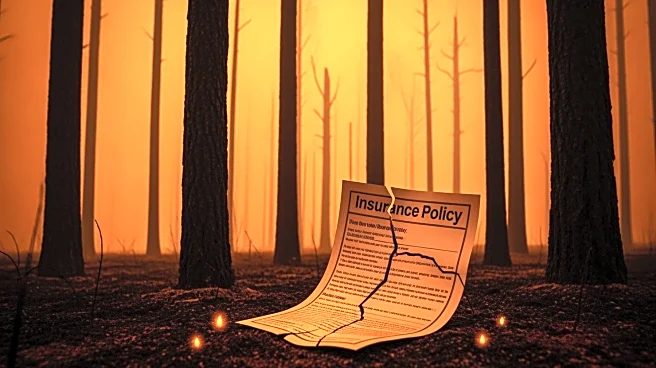
California experienced a significant wildfire crisis in 2025, leading to substantial financial impacts on the insurance industry. The Los Angeles wildfires were particularly devastating, resulting in insured losses of $40 billion, according to Swiss Re.
This prompted major insurers to reconsider their presence in the state, with some withdrawing from offering homeowners policies. In response, California's insurance regulator modified property/casualty insurance laws to facilitate rate hikes, encouraging insurers to continue operations in high-risk areas. The FAIR Plan, California's insurer of last resort, faced challenges in covering claims due to insufficient surplus and reinsurance deductibles. Consequently, a $1 billion assessment on admitted market insurers was approved to address claims from the wildfires.
Why It's Important?
The wildfires have highlighted vulnerabilities in California's insurance market, particularly concerning the ability to cover large-scale natural disasters. The financial strain on insurers could lead to increased premiums for homeowners, making insurance less affordable. This situation underscores the need for policy reforms to ensure the sustainability of the insurance market in disaster-prone areas. The crisis also raises questions about the adequacy of current insurance models in addressing climate-related risks, potentially prompting broader discussions on national insurance policies and climate change adaptation strategies.
What's Next?
As insurers and regulators navigate the aftermath of the wildfires, further rate adjustments and policy changes are likely. Insurers may continue to seek higher premiums to offset losses, while regulators might explore additional reforms to stabilize the market. The situation could also lead to increased litigation from homeowners dissatisfied with claim settlements, potentially influencing future insurance practices and regulations. Stakeholders, including government officials and industry leaders, will need to collaborate to develop long-term solutions that balance risk management with consumer protection.