
What's Happening?
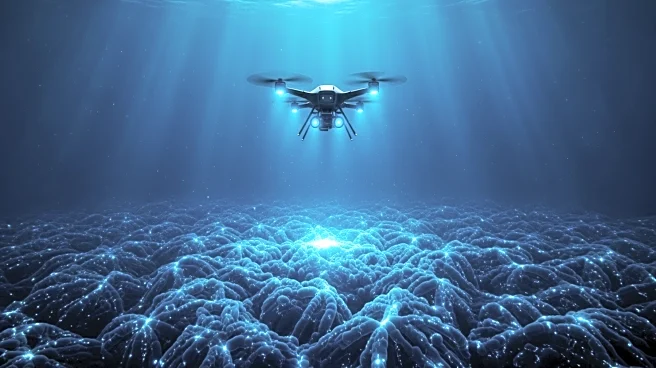
A Canadian-built robotic network has uncovered a massive biomass in the ocean, estimated at 346 million tons, equivalent to the weight of about 250 million elephants. This discovery was made possible through
the use of 903 autonomous floats from the global BGC-Argo program, which provided detailed data on the ocean's invisible productivity engines. The biomass is primarily composed of phytoplankton, microscopic algae that play a crucial role in the marine food web and global climate regulation. These organisms produce approximately half of the planet's breathable oxygen and sequester significant amounts of atmospheric CO2. The findings highlight the importance of phytoplankton in maintaining climate balance and underscore the need for advanced technology to explore the deep ocean, which remains beyond the reach of traditional satellite monitoring.
Why It's Important?
The discovery of this vast ocean biomass has significant implications for climate science and policy. Phytoplankton are essential for carbon sequestration and oxygen production, making them critical to understanding and mitigating climate change. The ability to accurately measure and model these processes can lead to more informed climate policies and better management of marine resources. This research also emphasizes the importance of international collaboration and open science in addressing global environmental challenges. By improving our understanding of oceanic processes, policymakers can make more effective decisions regarding emissions targets, marine conservation, and fishery management, ultimately contributing to the protection of high-value habitats and the sustainability of coastal communities.
What's Next?
The continued monitoring and study of oceanic biomass are crucial for refining climate models and informing policy decisions. Future efforts will likely focus on addressing challenges such as regional variability, ocean acidification, and the impact of warming on nutrient mixing. These factors could significantly alter plankton communities, with cascading effects on marine ecosystems and global climate patterns. Investing in technology and international cooperation will be essential to advancing our understanding of these complex systems and developing effective conservation strategies. As research progresses, the integration of new data into climate models will help differentiate natural variability from human-driven changes, providing a clearer picture of the ocean's role in climate regulation.
Beyond the Headlines
The discovery of this ocean biomass not only enhances our understanding of marine ecosystems but also highlights the ethical responsibility to protect these vital resources. The ocean's role as a carbon reservoir and oxygen producer underscores its importance in sustaining life on Earth. As we gain more insights into these processes, there is a growing need for policies that balance technological innovation with ecological stewardship. The findings also prompt a reevaluation of how we perceive and interact with the ocean, shifting from a surface-level understanding to a more comprehensive view of its layered, dynamic nature. This paradigm shift could lead to more sustainable practices and a greater appreciation for the ocean's hidden contributions to global health and stability.