


What's Happening?
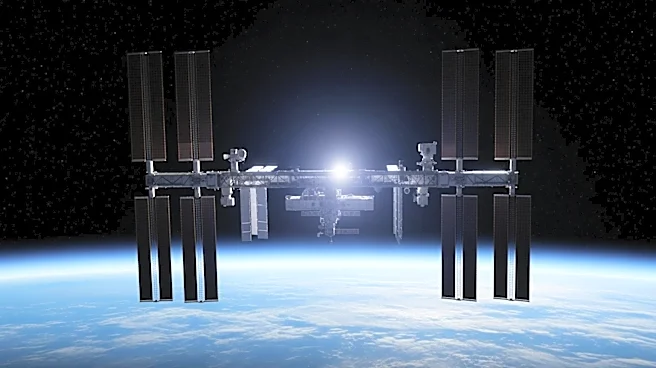
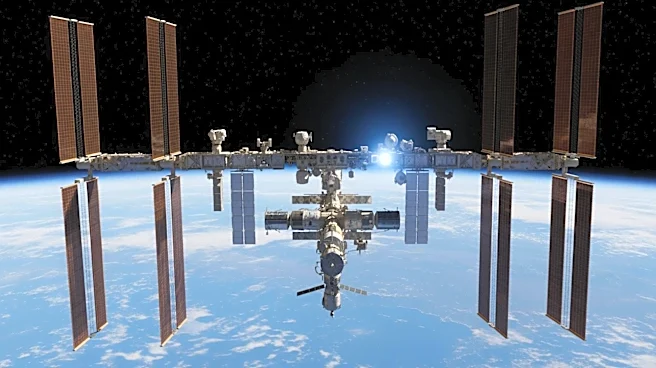
Astronauts aboard the International Space Station (ISS) have resumed normal operations after being on alert due to a worsening air leak. The four astronauts of NASA's Crew-12 mission, which includes two U.S. astronauts, a French astronaut, and a Russian
cosmonaut, were instructed to prepare for a potential evacuation by entering their Crew Dragon spacecraft and donning spacesuits. This precaution was taken as the air leak in the Russian Zvezda service module increased from one pound of air per day to two pounds. NASA and Roscosmos, the primary operators of the ISS, have been working together to address the issue. Roscosmos detected two oxygen leaks, one of which has been sealed, while preparations are underway to seal the second. NASA spokesperson Bethany Stevens announced that the crew could return to normal operations as Roscosmos paused structural repairs to assess the situation.
Why It's Important?
The incident highlights the ongoing challenges of maintaining the ISS, a critical platform for international cooperation in space exploration. The air leak issue underscores the importance of robust safety protocols and international collaboration in addressing technical challenges in space. The resolution of this issue is crucial for the safety of the crew and the continuation of scientific research conducted on the ISS. The collaboration between NASA and Roscosmos is vital in ensuring the station's operational integrity and the safety of its crew, reflecting the broader geopolitical cooperation in space despite terrestrial tensions.
What's Next?
NASA and Roscosmos will continue to monitor the situation closely and work towards a permanent solution to the air leak problem. Further repairs and assessments are expected as both agencies aim to prevent future occurrences. The incident may prompt a review of current safety protocols and maintenance procedures to enhance the station's resilience against similar issues. The international community supporting the ISS will likely be involved in discussions to ensure the station's long-term viability and safety.