








What's Happening?
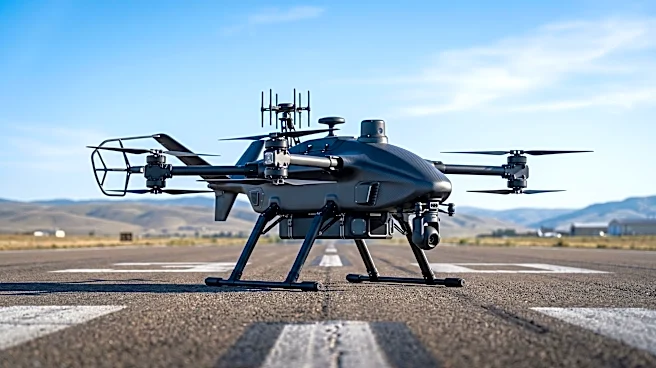
The U.S. Special Operations Command (USSOCOM) has acquired unmanned aerial systems from Tekever, a company that recently opened its first U.S. branch in Fayetteville, North Carolina. The acquisition follows a validation and acceptance test program, including
extensive flight operations and targeted training. While the specific number, model, configuration, or value of the purchase remains undisclosed, the deal signifies Tekever's entry into service with USSOCOM. The AR3, a vertical takeoff and landing (VTOL) aircraft, was previously featured in a 2025 field exercise with USSOCOM, demonstrating its operational capability in electronically contested environments. Tekever's systems are designed for reconnaissance, surveillance, and exploration in challenging conditions, featuring modular architecture and AI-powered mission software. The drones are equipped with advanced features such as a modular CRPA antenna to prevent GPS jamming, alternative navigation sensors, anti-spoofing encryption in the autopilot, and a 'No GPS' operating mode for environments where signals are completely jammed.
Why It's Important?
This acquisition is significant for U.S. national security, particularly for special operations, as it enhances their capabilities in contested environments where traditional GPS navigation may be compromised. The integration of advanced anti-jamming and anti-spoofing technologies directly addresses the growing threat of electronic warfare, which has been increasingly observed in global conflicts. By utilizing drones capable of operating without satellite correction, USSOCOM can maintain critical reconnaissance and surveillance operations even when adversaries attempt to disrupt communications and navigation. This move underscores a strategic shift towards resilient and adaptable military technology, ensuring that U.S. special forces can operate effectively in complex and hostile territories. The modular design and rapid integration of user feedback, as highlighted by Tekever, suggest a more agile approach to military procurement and technological advancement, potentially setting a precedent for future defense acquisitions.
What's Next?
The undisclosed nature of the acquisition leaves several possibilities for future developments. It could represent an initial procurement for operational evaluation, a limited quantity for specific missions, or the first phase of a larger program. Tekever's proximity to Fort Bragg, a key hub for U.S. Army Special Operations Command, suggests ongoing collaboration and rapid integration of feedback for further refinements. This close working relationship could lead to the development of even more sophisticated drone capabilities tailored to the evolving needs of special operations. Future iterations of these drones may see enhanced AI capabilities, longer endurance, and more robust countermeasures against emerging electronic threats. The success of these systems in real-world operations will likely influence future defense spending and procurement strategies for unmanned aerial systems across various branches of the U.S. military.
Beyond the Headlines
The acquisition of these advanced drones highlights a broader trend in modern warfare: the increasing reliance on autonomous and semi-autonomous systems capable of operating in highly contested domains. The emphasis on anti-jamming and anti-spoofing technologies reflects a recognition that electronic warfare is a critical component of contemporary conflicts. This development also raises ethical and legal considerations regarding the deployment of AI-powered systems in military operations, particularly concerning decision-making processes in autonomous modes. Furthermore, the ability of these drones to operate without GPS could reduce reliance on vulnerable satellite infrastructure, offering a strategic advantage. The continuous feedback loop between Tekever and USSOCOM signifies a shift towards more collaborative and iterative development cycles in defense technology, moving away from traditional, lengthy procurement processes. This approach could foster faster innovation and adaptation to new threats, but also necessitates robust oversight and testing protocols.