







What's Happening?
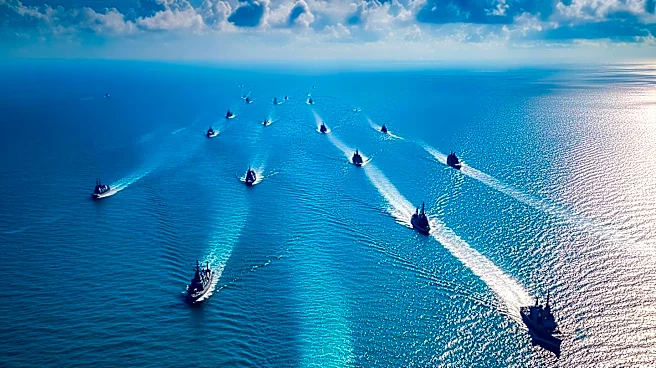
In February 2024, the European Union initiated the EUNAVFOR ASPIDES naval operation in the Red Sea and the Gulf of Aden. This operation is a key component of the EU Maritime Security Strategy, designed to protect freedom of navigation and ensure maritime
security for merchant and commercial vessels. The mission has successfully protected over 800 merchant vessels and monitored more than 2,000, achieving a 100% success rate in a high-risk environment. The operation demonstrates the EU's capability to conduct naval operations under its Common Security and Defense Policy. Headquartered in Larissa, Greece, EUNAVFOR ASPIDES operates with a strictly defensive mandate, adhering to international law and within its defined capabilities. This initiative is part of broader efforts to address rapidly evolving threats such as drone attacks, shadow fleet activities, and sabotage of critical maritime infrastructure, as highlighted in a joint report by the European Commission and the High Representative on the implementation of the EU Maritime Security Strategy.
Why It's Important?
The EUNAVFOR ASPIDES operation is crucial for maintaining global trade routes and economic stability, particularly in the Red Sea and Gulf of Aden, which are vital arteries for international shipping. The successful protection of merchant vessels directly impacts global supply chains, preventing disruptions that could lead to increased shipping costs, commodity price hikes, and economic instability. For U.S. industries and consumers, this means a more predictable flow of goods and potentially lower costs for imported products. The operation also underscores the EU's commitment to upholding international law, specifically the United Nations Convention on the Law of the Sea (UNCLOS), which is fundamental for global maritime governance. The presence of a robust naval force deters illicit activities and enhances overall maritime domain awareness, benefiting all nations reliant on these waterways for commerce and security. The success of this operation helps mitigate risks for U.S. and international shipping companies, ensuring safer passage for their fleets.
What's Next?
The EU plans to continue strengthening its maritime security capabilities and cooperation. The annual live EU maritime security exercise will persist, bringing together Member States' navies, coastguards, and specialized EU agencies to test operational cooperation and information exchange. Further reinforcement of operational capacity building through multipurpose maritime operations (MMOs) is scheduled, including major exercises in various European seas through 2026. The EU will also build on progress in enhancing maritime domain awareness, with the operational phase of the Common Information Sharing Environment (CISE) having launched in July 2024. Efforts to manage risks and threats, such as concrete actions against the shadow fleet and the implementation of the Action Plan on Cable Security, will continue. The Council's approval of European Defence Projects of Common Interest, focusing on Integrated Maritime and Seabed Defence and Drone and Counter-Drone European Resolve, indicates ongoing investment in advanced capabilities to address evolving maritime threats.
Beyond the Headlines
The EUNAVFOR ASPIDES operation reflects a broader geopolitical shift towards increased maritime security challenges and the necessity for international cooperation. The rise of drone attacks and shadow fleet activities signifies a new era of asymmetric threats that traditional naval forces must adapt to. The EU's strategy emphasizes a comprehensive approach, integrating civilian and military efforts, and fostering partnerships with key international actors. This integrated approach could serve as a model for other regions facing similar maritime security concerns. The focus on protecting critical maritime infrastructure, such as undersea cables, highlights the vulnerability of modern interconnected economies to sabotage and disruption. The long-term implications include a potential re-evaluation of naval doctrines and increased investment in technologies that can counter these evolving threats, ultimately shaping the future of global maritime security and international trade dynamics.