







What's Happening?
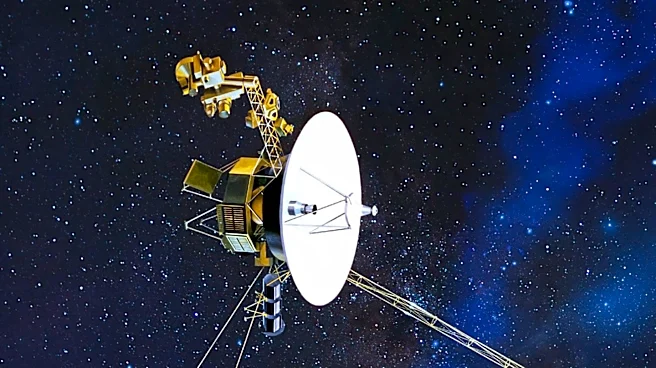
Voyager 1, a spacecraft launched in 1977, continues its journey beyond the orbit of Pluto, traveling at 38,000 miles per hour. Originally designed for a four-year mission to study the outer planets, Voyager 1 has exceeded expectations by operating for nearly
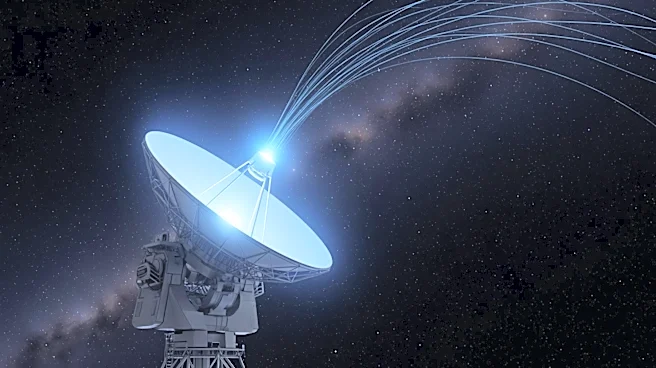
five decades. The spacecraft, equipped with technology from the mid-1970s, including 68 kilobytes of memory and a data transmission rate of 160 bits per second, continues to send data back to Earth. Despite the aging technology, the spacecraft's systems, powered by radioisotope thermoelectric generators, remain functional, allowing it to transmit data from interstellar space. The mission has outlasted many of the engineers who built it, with current operations managed by a new generation of scientists at NASA's Jet Propulsion Laboratory.
Why It's Important?
Voyager 1's continued operation highlights the durability and foresight of 1970s engineering, providing invaluable data from interstellar space. This mission underscores the potential for long-term space exploration and the importance of investing in robust technology. The data collected by Voyager 1 contributes to our understanding of the heliosphere and interstellar medium, offering insights that could inform future missions. The spacecraft's journey also serves as a testament to human ingenuity and the enduring legacy of space exploration, inspiring future generations of scientists and engineers.
What's Next?
Voyager 1 is expected to continue its journey through interstellar space, with its power supply projected to last until the early 2030s. As it travels, it will pass near other stars, providing opportunities for further study of the interstellar environment. The mission's success may influence future space exploration strategies, emphasizing the need for durable and adaptable technology. NASA and other space agencies may draw lessons from Voyager 1's longevity to design future missions capable of withstanding the harsh conditions of space for extended periods.
Beyond the Headlines
Voyager 1's mission raises questions about the long-term sustainability of space exploration and the ethical considerations of sending human-made objects into deep space. The spacecraft carries a Golden Record, intended as a message to potential extraterrestrial civilizations, highlighting the cultural and philosophical dimensions of space exploration. As Voyager 1 continues its journey, it challenges us to consider our place in the universe and the legacy we leave behind.