






What's Happening?
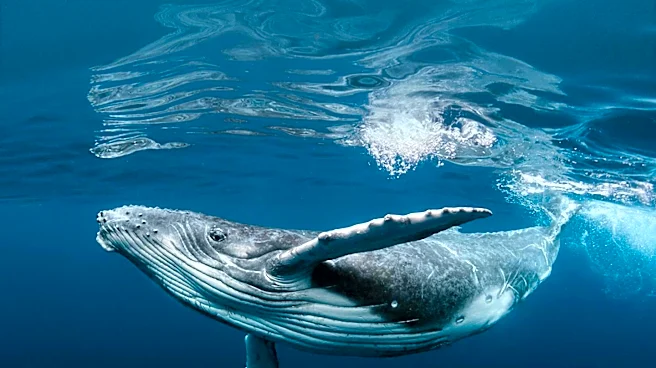
In British Columbia, two groups are actively working to protect endangered whale species from vessel strikes and noise pollution. The HALLO project, based at Simon Fraser University, uses technology to monitor whale movements and vessel traffic in the
Salish Sea, aiming to reduce ship noise that interferes with the whales' ability to find food. The W̱SÁNEĆ Marine Guardians, an Indigenous-led initiative, are collaborating with HALLO to restore the bond between First Nations people and the whales, advocating for increased protections. These efforts are crucial as southern resident killer whales, one of the most critically endangered marine mammals in Canada, face threats from declining chinook salmon populations and busy shipping corridors.
Why It's Important?
The conservation efforts in British Columbia are significant as they address the urgent need to protect endangered whale species, particularly the southern resident killer whales. These whales are vital to the marine ecosystem, and their survival is threatened by human activities such as shipping and fishing. The initiatives aim to mitigate these threats by advocating for policy changes and implementing technology to monitor and protect whale populations. The success of these efforts could lead to improved conservation strategies and increased awareness of the impact of human activities on marine life, potentially influencing public policy and industry practices.
What's Next?
The HALLO project and W̱SÁNEĆ Marine Guardians are pushing for further protections, including extending vessel restricted zones year-round. The Canadian government has recently increased the distance vessels must maintain from southern resident orcas, but advocates argue for more comprehensive measures. Additionally, new technologies, such as optical systems developed by Reach Technologies Inc., are being explored to help vessels detect and avoid whales, potentially reducing the number of vessel strikes. These developments could lead to broader adoption of conservation technologies and policies, enhancing the protection of marine mammals in the region.
Beyond the Headlines
The efforts to protect whales in British Columbia highlight the intersection of technology, indigenous knowledge, and conservation. The collaboration between scientific projects and Indigenous-led initiatives underscores the importance of integrating traditional ecological knowledge with modern conservation strategies. This approach not only aims to protect endangered species but also fosters cultural preservation and strengthens community ties. The long-term success of these efforts could serve as a model for other regions facing similar challenges, promoting sustainable practices and respect for indigenous rights in environmental conservation.