







What's Happening?
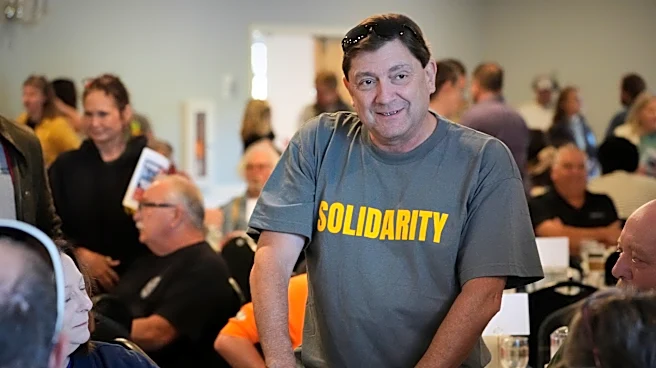
Sam Forstag, a former smokejumper and Democratic candidate, is running for Congress in Montana's first congressional district, campaigning on the belief that the U.S. has lost its empathy. Forstag's platform is deeply personal, arguing that economic pressures
force Americans to prioritize survival over compassion for their neighbors. He recounts a personal anecdote from 2013 where he couldn't stop to help a stranded motorist due to financial constraints, a moment that shaped his political identity. Forstag, a scholarship kid raised by a single mother, has built his campaign around addressing the economic struggles of the working class, which he believes are exploited by politicians like President Trump to fuel culture wars and anti-immigrant rhetoric. He aims to flip a district that has historically favored Republicans, galvanizing young and working-class voters with his message.
Why It's Important?
Forstag's campaign is significant as it challenges the prevailing political narratives by focusing on the economic roots of societal issues and the erosion of empathy. His message resonates with a segment of the population that feels neglected by both major parties, highlighting the widespread economic anxieties in the U.S. The campaign's ability to attract young and working-class voters in a Republican-leaning district could indicate a shift in political priorities or a growing disillusionment with traditional politics. His criticism of President Trump's politics as a consequence of economic struggle offers an alternative perspective on the current political climate. Furthermore, his willingness to critique both parties and reject support from certain political action committees (like AIPAC) positions him as an independent voice, potentially influencing the broader Democratic party's strategy.
What's Next?
Forstag is currently campaigning to win Montana's first congressional district in the upcoming midterm election. His strategy involves rebuilding a coalition of libertarians, right-leaning Democrats, and working-class Republicans, similar to the one that led Jon Tester to victory in 2024. He will continue to emphasize his economic message and his willingness to work across party lines, despite endorsements from progressive figures like Bernie Sanders and Alexandria Ocasio-Cortez, which some fear might label him as too liberal. The election will determine if his message of economic empathy can successfully challenge the established political landscape in Montana and beyond. The outcome will be closely watched as a potential indicator of shifting voter sentiments.
Beyond the Headlines
Forstag's campaign delves into the deeper societal implications of economic inequality and political polarization. His argument that economic pressures diminish empathy raises profound questions about the social fabric of the U.S. and the impact of policy on human connection. The campaign also highlights the internal tensions within the Democratic party between its moderate and progressive wings, and the challenge of appealing to a broad electorate while maintaining ideological integrity. His personal story, from smokejumper to political candidate, embodies a narrative of public service and a desire to address systemic issues. This campaign could spark broader conversations about the role of government in fostering a more compassionate society and the need for political leaders who genuinely understand and address the material conditions of everyday Americans.