









What's Happening?
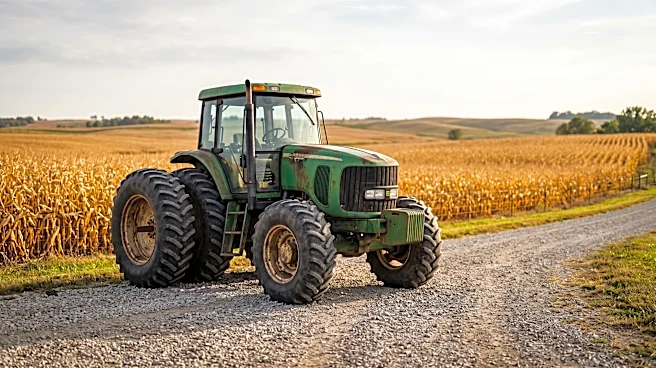
Farmers in Missouri are experiencing significant financial pressure as high diesel and fertilizer costs erode potential profits from what is otherwise a good harvest season. Christopher Hudson, a farmer in Pike County, Missouri, noted that despite good yields,
the increased expenses for fuel and fertilizer are preventing substantial earnings. Diesel prices have surged by nearly $3 per gallon since the beginning of the year, and fertilizer costs are at levels not seen since the 2022 Russia-Ukraine conflict. Agriculture is Missouri's leading industry, generating over $93 billion annually, making the profitability of its farmers critical to the state's economy. In response to the challenges, Missouri Gov. Mike Kehoe issued an executive order in late September, suspending restrictions on red-dyed diesel and weight limitations for agricultural vehicles to aid farmers during harvest.
Why It's Important?
The financial strain on Missouri farmers due to escalating input costs has significant ripple effects across the state's economy. Agriculture, as the leading industry, underpins various sectors including manufacturing, retail, and transportation. When farmers' profits are squeezed, it impacts their ability to invest, which can slow economic activity in rural areas. The reliance on diesel for equipment and fertilizer for crop growth means these price hikes directly threaten the viability of farming operations. This situation highlights the vulnerability of the agricultural sector to global geopolitical events and supply chain disruptions, underscoring the need for resilient farming practices and supportive policies to ensure food security and economic stability in the region.
What's Next?
Farmers like Christopher Hudson are exploring strategies such as precision agriculture, improved management practices, and adjusting planting windows to optimize yields and manage costs. However, the long-term outlook remains uncertain, with experts like David Spielman, an agricultural economist at Washington University in St. Louis, emphasizing the need for change in farming practices. While government programs and federal crop insurance exist to mitigate large losses, they often only reduce the extent of losses rather than ensuring profitability. The industry may see further consolidation and automation as farmers seek efficiency. Continued research into technological solutions, diversification, and improved plant genetics will be crucial for the future of Missouri's agricultural sector, aiming to develop sustainable strategies that can adapt to fluctuating costs and unpredictable market conditions.
Beyond the Headlines
The current challenges faced by Missouri farmers extend beyond immediate financial concerns, touching upon the broader issues of food system resilience and the future of rural communities. The increasing cost of essential inputs like fertilizer and fuel could accelerate the trend of consolidation in agriculture, potentially leading to fewer, larger farms and impacting the traditional family farm model. This situation also underscores the environmental implications of current farming practices, as high fertilizer costs might prompt a re-evaluation of nutrient management strategies, potentially encouraging more sustainable approaches like crop residue recycling. The stress on farmers, as described by Hudson, also points to the mental health burden within agricultural communities, highlighting the need for comprehensive support systems that address both economic and personal well-being.