


What's Happening?
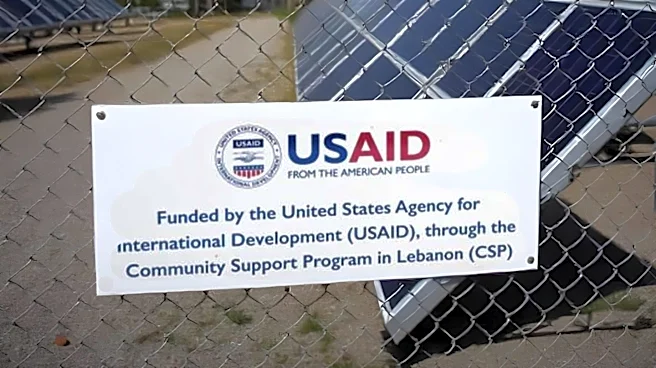
The U.S. Agency for International Development (USAID) is confronting significant operational challenges in 2025 and 2026, including a near-total freeze on foreign aid mandated by the second Trump administration. This directive has been accompanied by plans
to shut down the organization, spearheaded by Department of Government Efficiency head Elon Musk. While Secretary of State Marco Rubio has issued humanitarian aid waivers, the future structure and operational capacity of USAID remain uncertain. The funding cuts have already had severe repercussions, particularly in Sudan, where healthcare providers are struggling to maintain services. This has led to the closure of medical facilities and an overwhelming burden on the remaining operational hospitals. A study published in The Lancet estimates that the reduction in USAID funding could contribute to over 14 million additional deaths by the end of the decade, highlighting the critical impact of these policy changes on global health and humanitarian efforts.
Why It's Important?
The potential shutdown and severe funding cuts to USAID carry profound implications for U.S. foreign policy, global humanitarian aid, and international development. USAID has historically been a cornerstone of American soft power, providing critical assistance in health, education, economic growth, and disaster relief worldwide. The withdrawal of such support could create significant vacuums in humanitarian response, potentially leading to increased instability in vulnerable regions and undermining U.S. influence on the global stage. For U.S. industries, particularly those involved in international development and contracting, a USAID shutdown would mean a substantial loss of business and expertise. Furthermore, the impact on public policy would be immense, as the U.S. reevaluates its role in global aid and development, potentially shifting towards a more isolationist stance. The reported increase in deaths due to aid cuts underscores the direct human cost and the ethical considerations surrounding such policy decisions, affecting millions who rely on this assistance for survival and well-being.
What's Next?
The immediate future for USAID involves navigating the ongoing freeze on foreign aid and the looming threat of a complete shutdown. Stakeholders, including international organizations, non-governmental organizations, and foreign governments, will likely continue to assess the impact of reduced U.S. funding and seek alternative sources of support. Secretary of State Marco Rubio's issuance of humanitarian aid waivers suggests a potential avenue for limited, targeted assistance, but the overall direction remains dictated by the administration's broader policy. The Department of Government Efficiency, under Elon Musk, is expected to continue its efforts to dismantle the agency, which will likely involve further legislative and administrative actions. The international community will be closely watching how the U.S. redefines its engagement in global humanitarian efforts and whether other nations or multilateral organizations step in to fill the void left by a diminished USAID. The long-term consequences will depend on the final decisions regarding USAID's fate and the subsequent global response to the resulting humanitarian and development challenges.
Beyond the Headlines
The challenges facing USAID extend beyond immediate funding cuts and organizational restructuring, touching upon deeper ethical and strategic considerations for the United States. The potential dismantling of USAID could signal a fundamental shift in American values regarding global responsibility and humanitarian intervention. Ethically, the estimated 14 million additional deaths due to aid reduction raise serious questions about the moral obligations of a wealthy nation towards global suffering. Strategically, the move could diminish U.S. influence and create opportunities for rival powers to expand their presence in regions where USAID once played a crucial role. This could lead to a reordering of global alliances and a more fragmented international aid landscape. Culturally, the decision could alter how the U.S. is perceived globally, potentially eroding decades of goodwill built through humanitarian efforts. The long-term implications include a potential increase in global instability, refugee crises, and public health emergencies, all of which could eventually have ripple effects back to U.S. national security and economic interests.