






What's Happening?
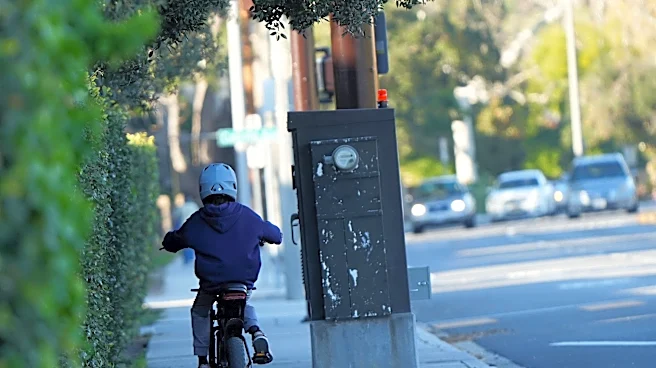
Governor Maura Healey has filed the 'Ride Safe Act' in Massachusetts, a legislative proposal aimed at regulating electric bikes and scooters, particularly in response to a dramatic increase in severe injuries among children. Emergency room doctors across
the state have reported a significant surge in e-bike and e-scooter related traumas, with some hospitals seeing a tenfold increase in visits compared to last year. The proposed bill seeks to classify powered devices by their top speed rather than device type, making devices exceeding 20 miles per hour off-limits to anyone under 16. This initiative comes as current regulations are described as uneven and outdated, leading to a patchwork of local ordinances and confusion among riders, law enforcement, and officials. The bill has received support from legislative leaders and is currently part of a broader economic development package pending in the Statehouse.
Why It's Important?
The 'Ride Safe Act' is crucial for public safety, especially for children, as the popularity of e-bikes and e-scooters has outpaced existing regulations. The alarming rise in severe injuries, including traumatic brain injuries and shattered bones, highlights a significant public health concern. Current regulations are insufficient because e-bikes are heavier and faster than traditional bicycles, often exceeding the protective capabilities of standard bike helmets. This legislative effort aims to create a uniform statewide safety framework, providing clear guidelines on age restrictions and speed limits, which is essential for preventing further accidents and fatalities. The lack of consistent rules has created a dangerous environment where young riders, often unaware of road regulations, operate powerful machines, posing risks to themselves and others. This bill seeks to close regulatory gaps and enhance safety for all road users.
What's Next?
The 'Ride Safe Act' is currently integrated into a broader economic development package and is pending in the Massachusetts Statehouse. Its passage would lead to the implementation of new statewide classifications for powered devices based on speed and age restrictions for riders. This would require a significant public awareness campaign to inform parents, children, and retailers about the new rules. Law enforcement agencies would also need to adapt to and enforce these updated regulations, potentially leading to changes in how they address e-bike and e-scooter incidents. If the bill passes, it could serve as a model for other states grappling with similar issues related to the rapid adoption of new personal mobility technologies. Conversely, if it faces delays or does not pass, the problem of increasing e-bike injuries among children is likely to persist, prompting continued calls for action from medical professionals and concerned citizens.
Beyond the Headlines
The surge in e-bike and e-scooter injuries among children in Massachusetts, and the legislative response, points to a broader societal challenge: the rapid evolution of technology outpacing regulatory frameworks. This situation highlights the ethical responsibility of manufacturers, retailers, and policymakers to anticipate and mitigate potential risks associated with new products, especially those used by minors. The issue also touches upon parental responsibility in supervising children's use of powerful devices and the need for comprehensive education on road safety. Furthermore, the uneven and outdated regulations reflect a systemic lag in governance, where laws struggle to keep pace with technological innovation. This scenario underscores the importance of proactive legislative measures and inter-agency collaboration to ensure public safety in an increasingly technologically advanced world, raising questions about how societies can better adapt to and manage the risks of emerging technologies.