








What's Happening?
A significant randomized trial, known as the PrEggNut trial, has concluded that a maternal diet rich in eggs and peanuts during pregnancy and breastfeeding does not lead to a substantial reduction in the risk of egg or peanut allergy in infants by one
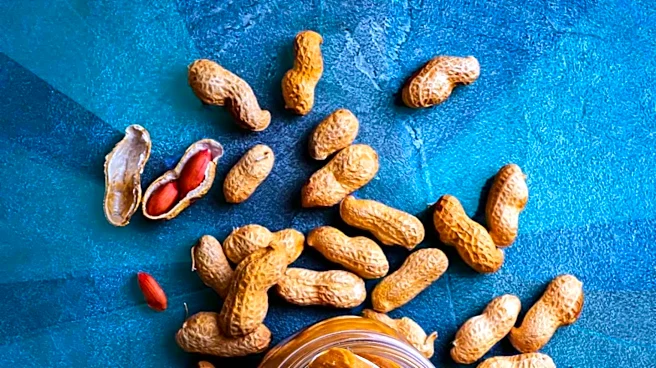
year of age. The study, published in the New England Journal of Medicine, involved 2,137 pregnant women with a family history of allergic disease. Participants were divided into two groups: a high-intake group, instructed to consume six eggs and 60 peanuts weekly from 23 weeks of pregnancy until four months postpartum or the end of breastfeeding, and a standard group, advised to consume no more than three eggs and 30 peanuts weekly. Researchers assessed infants for IgE-mediated egg or peanut allergy using skin-prick testing and oral food challenges. The results showed that 7.8% of infants in the high-intake group developed an allergy, compared to 8.4% in the standard group, a difference deemed not statistically significant. Similar non-significant findings were observed for individual egg allergies, sensitization, and eczema.
Why It's Important?
This study challenges a previously held hypothesis that increased maternal exposure to allergens through diet could establish immune tolerance in infants before the introduction of solid foods. The findings are crucial for public health guidance, as they suggest that focusing solely on high maternal consumption of eggs and peanuts during pregnancy or lactation may not be an effective strategy for preventing infant food allergies. Instead, the research reinforces the importance of other evidence-based approaches, particularly the timely introduction of egg and peanut directly into the infant's diet, as a key allergy-prevention strategy. For parents and healthcare providers, this clarifies that while avoiding these foods during pregnancy or breastfeeding is not recommended, significantly increasing their intake by the mother is unlikely to offer a protective benefit against infant allergies. This information can help guide dietary recommendations for pregnant and breastfeeding individuals, ensuring that efforts to prevent allergies are directed towards more effective interventions.
What's Next?
The results of the PrEggNut trial will likely influence future clinical guidelines and public health recommendations regarding maternal diets and infant allergy prevention. While the study does not advocate for mothers to avoid eggs or peanuts, it suggests that the focus for allergy prevention should shift away from high maternal intake during pregnancy and breastfeeding. Future research may further explore the optimal timing and methods for introducing allergenic foods directly to infants to promote immune tolerance. Healthcare providers will continue to emphasize the importance of a balanced diet for pregnant and breastfeeding individuals, while also providing updated guidance on infant feeding practices based on the latest scientific evidence. The study's limitations, such as a lower-than-expected allergy prevalence and moderate adherence to assigned diets, may also prompt further investigation into these factors in subsequent trials.
Beyond the Headlines
The study's findings have broader implications for how scientific hypotheses are tested and refined in the field of maternal and infant health. The initial theory that maternal allergen exposure could prevent allergies was a plausible one, rooted in the concept of immune tolerance. However, this large-scale trial demonstrates the necessity of rigorous testing to validate such hypotheses. The outcome underscores that biological mechanisms are complex and not always intuitive, highlighting the value of evidence-based medicine. Ethically, the study provides reassurance to pregnant and breastfeeding individuals that they do not need to drastically alter their diets by consuming unusually high amounts of specific allergens in an attempt to prevent allergies, thereby reducing potential dietary stress or unnecessary restrictions. It also reinforces the ongoing scientific endeavor to understand the intricate interplay between genetics, environment, and early life exposures in the development of allergic diseases.