
What's Happening?
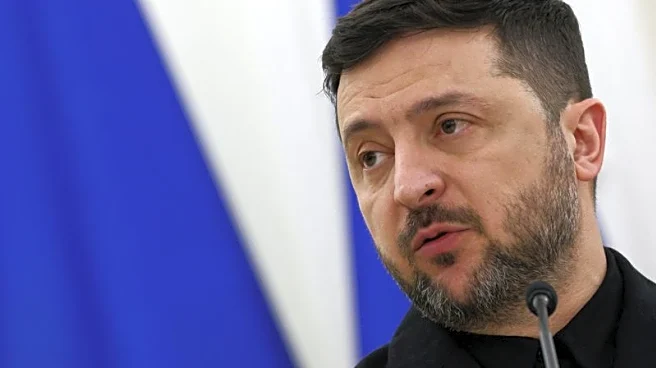
Ukrainian President Volodymyr Zelenskyy announced that the next round of trilateral peace talks involving Ukraine, Russia, and the United States has been rescheduled to take place on February 4 and 5 in Abu
Dhabi. The meetings, initially planned for Sunday, were postponed due to the United States' preoccupation with escalating tensions in the Middle East. Zelenskyy emphasized Ukraine's readiness for substantive discussions aimed at achieving a dignified resolution to the ongoing conflict. The U.S. is mediating these negotiations, and clarity on the meeting specifics was awaited by Kyiv. The previous meeting occurred a week ago, and U.S. special envoy Steve Witkoff recently held discussions with Kremlin representative Kirill Dmitriev in Florida. A major point of contention remains the status of the Donbas region, with Ukraine rejecting Russia's demands for control relinquishment. Meanwhile, Ukraine is addressing power outages caused by a technical malfunction affecting power lines shared with Moldova.
Why It's Important?
The delay in peace talks underscores the complex geopolitical landscape, where U.S. foreign policy priorities can impact international conflict resolution efforts. The ongoing war in Ukraine has significant implications for regional stability and global security, affecting energy markets and international relations. The U.S. involvement as a mediator highlights its strategic interest in resolving the conflict, which could influence its diplomatic standing and alliances. The outcome of these talks could alter the balance of power in Eastern Europe and affect U.S.-Russia relations. The persistent issue of the Donbas region remains a critical barrier to peace, with potential consequences for Ukraine's territorial integrity and sovereignty.
What's Next?
The rescheduled talks in Abu Dhabi will be closely watched for any breakthroughs or shifts in negotiation dynamics. Stakeholders, including European allies and international organizations, will likely respond to developments, potentially influencing diplomatic strategies and aid commitments. The U.S. may need to balance its focus between the Middle East and Eastern Europe, impacting its foreign policy agenda. The resolution of the Donbas issue will be pivotal, with potential implications for future peace agreements and regional security frameworks.