







What's Happening?
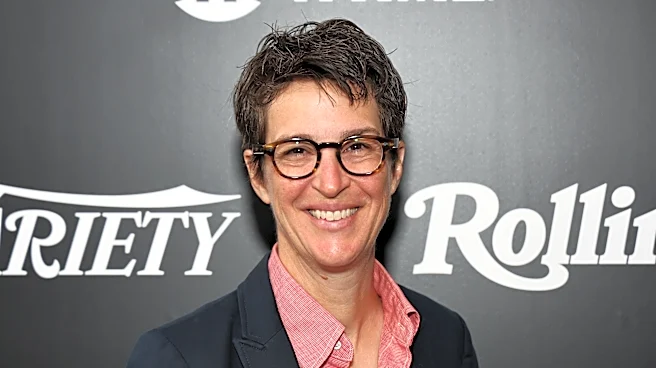
Persistent online rumors and AI-generated misinformation have circulated regarding Rachel Maddow, host of 'The Rachel Maddow Show' on MSNBC, and her partner Susan Mikula, specifically concerning whether they have children. According to the source, Rachel Maddow does
not have any children, biological or adopted, with Susan Mikula. The couple has been in a committed long-term relationship since 1999. Misleading images, including those depicting Maddow as pregnant or holding an ultrasound scan, appeared in 2025 but were confirmed to be AI-generated fabrications. Maddow, born in 1973, and Mikula, born in 1958, have a 15-year age difference. Mikula is a self-taught photographer known for her use of analog equipment and vintage photographic techniques. The couple resides in a pre-Civil War farmhouse in western Massachusetts and an apartment in the West Village, Manhattan. Their private life briefly became public in November 2020 when Maddow revealed on air that Mikula had contracted COVID-19, from which she subsequently recovered.
Why It's Important?
The prevalence of AI-generated misinformation, as seen in the false claims about Rachel Maddow's family life, highlights a growing challenge in the digital age. This incident underscores how easily fabricated content can spread online, influencing public perception and potentially impacting the personal lives of public figures. For media consumers, it emphasizes the critical need for media literacy and skepticism towards unverified online content, especially images. For public figures, it illustrates the vulnerability to digital manipulation and the necessity of addressing such falsehoods to maintain personal privacy and professional integrity. The enduring partnership of Maddow and Mikula, despite the public scrutiny and misinformation, also serves as a notable example of a long-term same-sex relationship in the public eye, contributing to broader discussions on LGBTQ+ representation and family structures in American society.
What's Next?
As AI technology continues to advance, the creation and dissemination of deepfakes and other forms of synthetic media are likely to become more sophisticated and widespread. This trend suggests an ongoing need for media organizations and technology platforms to develop and implement more robust methods for identifying and flagging AI-generated content. Public figures and their teams may increasingly need to proactively monitor online narratives and issue clarifications to combat misinformation. Educational initiatives aimed at improving digital literacy among the general public will also become more crucial to help individuals discern credible information from fabricated content. The incident with Rachel Maddow serves as a case study for how misinformation can impact individuals and underscores the evolving landscape of information consumption and verification.
Beyond the Headlines
This situation extends beyond mere celebrity gossip, touching upon significant ethical and societal implications of artificial intelligence. The ease with which AI can generate convincing but false images raises profound questions about truth, authenticity, and trust in the digital realm. It challenges the traditional understanding of photographic evidence and could lead to a future where visual information is routinely questioned. Legally, it opens discussions about accountability for the creation and spread of AI-generated misinformation, and the potential for new regulations or legal frameworks to address these emerging challenges. Culturally, it reflects a broader societal shift where the lines between reality and simulation are increasingly blurred, impacting how individuals perceive and interact with information, and potentially eroding trust in public discourse and institutions.