
What's Happening?
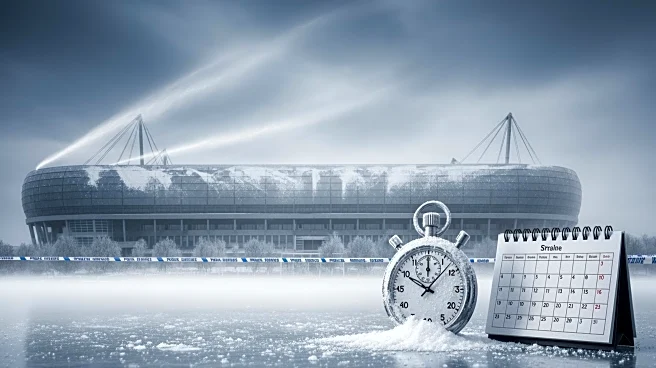
A significant winter storm is expected to impact a large portion of the United States, from New Mexico to New England, starting Friday. Meteorologists predict that the storm could bring snow, ice, and frigid
temperatures, potentially causing disruptions similar to those of a major hurricane. In anticipation, several sports leagues have already begun adjusting their schedules. The Texas Rangers canceled their Fan Fest event due to the forecast of frozen precipitation in North Texas. Additionally, the Sun Belt Conference and the American Athletic Conference have rescheduled basketball games to avoid the worst of the weather. The storm's potential impact has also led to concerns about salt shortages in New Jersey, with some towns struggling to secure enough supplies for road safety.
Why It's Important?
The impending winter storm highlights the vulnerability of infrastructure and public events to extreme weather conditions. The proactive measures taken by sports leagues underscore the importance of safety and preparedness in the face of natural disasters. The storm's potential to disrupt travel and daily activities could have economic implications, particularly for businesses reliant on weekend traffic. Moreover, the salt shortage in New Jersey points to broader supply chain challenges that can arise during severe weather events. This situation serves as a reminder of the need for robust emergency planning and resource management to mitigate the impact of such storms on communities and industries.
What's Next?
As the storm approaches, affected regions are likely to see increased activity in emergency preparedness, including road treatments and public advisories. Sports leagues and other event organizers may continue to adjust schedules to ensure safety. Local governments and businesses will need to address supply chain issues, particularly regarding essential materials like road salt. The response to this storm could influence future strategies for dealing with similar weather events, potentially leading to improved infrastructure resilience and emergency response protocols.