


What's Happening?
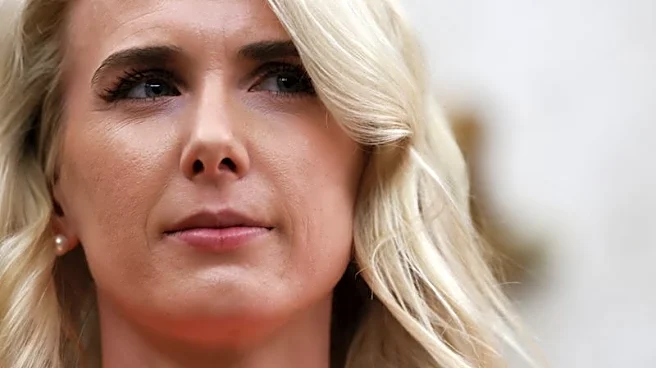
Late-night host Jimmy Kimmel has publicly criticized President Trump for providing $45,000 Christmas bonuses to three young women in his office, including Natalie Harp, Margo Martin, and Chamberlain Harris. Kimmel highlighted that a male aide, Walt Nauta,
received a lesser bonus of $20,000. He sarcastically suggested there was nothing unusual about an 80-year-old billionaire president giving such sums to young female employees. Ethics experts, including Richard Painter, former White House chief ethics lawyer under President George W. Bush, have labeled these payments as 'sketchy,' stating that U.S. government employees should not receive 'tips.' Kimmel's comments were made during his Wednesday night monologue, where he also showed images of the recipients.
Why It's Important?
This situation raises significant ethical questions regarding the conduct of public officials and the use of taxpayer funds or campaign contributions for personal bonuses. The criticism from ethics experts underscores concerns about potential conflicts of interest and the appearance of impropriety within government operations. Such actions can erode public trust in political leadership and government institutions, particularly when financial transactions involve individuals in positions of power and their staff. The disparity in bonus amounts between male and female employees also brings up questions of fairness and potential gender bias in compensation practices within political offices, even if not explicitly stated as such. This event contributes to ongoing debates about transparency and accountability in political finance and staff management.
What's Next?
The public discourse surrounding these bonuses is likely to continue, potentially prompting further scrutiny from media outlets, ethics watchdogs, and political opponents. While the immediate financial impact of these specific bonuses may be limited, the broader implications could lead to calls for stricter regulations or clearer guidelines regarding gifts and bonuses for government employees. Political adversaries may leverage this issue in future campaigns, using it to question the ethical standards of President Trump and his administration. The incident could also spark internal reviews or discussions within government ethics offices about the appropriateness of such payments and whether existing rules are sufficient to prevent perceived or actual impropriety.
Beyond the Headlines
Beyond the immediate controversy, this incident touches upon deeper societal perceptions of power dynamics, gender, and financial transparency in politics. The sarcastic tone adopted by Kimmel reflects a broader cultural skepticism towards the actions of political figures, especially when they involve large sums of money and personal relationships. It highlights the challenge of maintaining ethical boundaries in high-profile political environments, where personal and professional lines can often blur. The public's reaction to such news can influence voter sentiment and contribute to a growing demand for greater accountability and ethical conduct from elected officials and their staff. This event serves as a reminder of the constant tension between personal discretion and public responsibility in government.