



What's Happening?
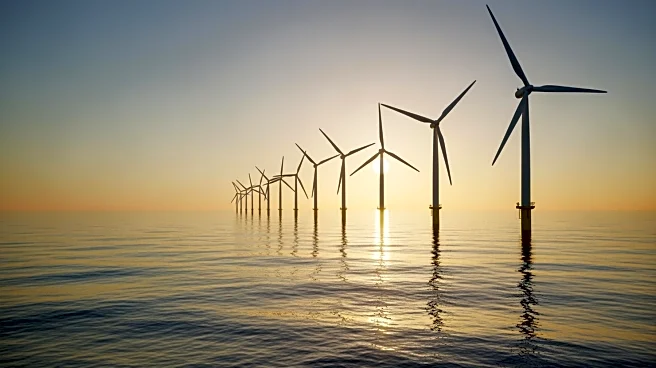
Nine European nations, including Germany, France, the UK, and Denmark, have pledged to develop 300 gigawatts of clean energy capacity in the North Sea by mid-century. This commitment, formalized in the 'Hamburg Declaration,' aims to reduce dependence
on Russian energy and enhance Europe's energy security. The agreement includes plans for an unprecedented fleet of joint offshore wind projects, which will be directly connected to multiple countries through interconnectors. This initiative is part of a broader effort by the European Union to transition away from Russian energy imports following the invasion of Ukraine.
Why It's Important?
The development of offshore wind projects in the North Sea is a strategic move to enhance Europe's energy independence and security. By reducing reliance on Russian energy, European nations can mitigate geopolitical risks and strengthen their resilience against energy blackmail. The initiative also supports the EU's climate goals by increasing the share of renewable energy in the region's energy mix. The commitment to large-scale offshore wind projects is expected to drive significant investment and innovation in the renewable energy sector, contributing to economic growth and job creation.
What's Next?
The participating nations will focus on accelerating the development of offshore wind projects to meet the targets set in the Hamburg Declaration. This will involve collaboration on infrastructure development, regulatory frameworks, and financing mechanisms. The success of these projects will depend on the ability to overcome technical and logistical challenges, as well as securing the necessary political and public support. The initiative is likely to influence energy policies and investment decisions across Europe, as countries seek to balance energy security with climate commitments.