





What's Happening?
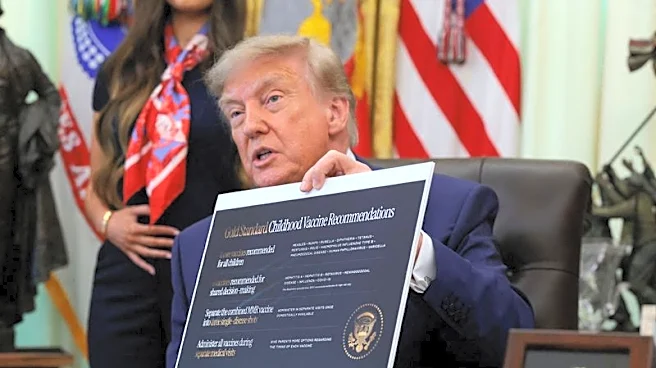
Several states are considering opposing President Trump's new executive order on childhood vaccines, which introduces 'Gold Standard Childhood Vaccine Recommendations.' This order reduces the number of diseases for which children are federally recommended
to receive immunizations and suggests states review school-entry vaccine laws. Many states, particularly those led by Democrats, already rely on medical sources other than the CDC for vaccine guidance. States like California, Oregon, Washington, and Hawaii have formed alliances to issue science-based vaccine recommendations, prioritizing safety and transparency over federal directives.
Why It's Important?
The potential defiance of Trump's vaccine order by multiple states underscores the ongoing tension between federal and state governance, particularly in public health policy. This move could lead to a patchwork of vaccine policies across the U.S., affecting public health outcomes and potentially increasing vaccine hesitancy. The reliance on non-federal sources for vaccine guidance reflects a broader trend of states seeking autonomy in health policy, which could have long-term implications for federal-state relations and public trust in health recommendations.
What's Next?
States opposing the federal vaccine order may face legal challenges, especially if they significantly deviate from federal guidelines. The outcome of these challenges could set precedents for state autonomy in health policy. Additionally, the response from the federal government, including potential funding implications, will be critical. Public health organizations and advocacy groups are likely to play a significant role in shaping the discourse and influencing policy decisions at both state and federal levels.