






What's Happening?
Collaborative research involving the Guy Harvey Foundation, the Guy Harvey Research Institute at Nova Southeastern University (NSU), Mexican conservation organization Ch’ooj Ajauil AC, and the University of Rhode Island has resulted in a new world record.
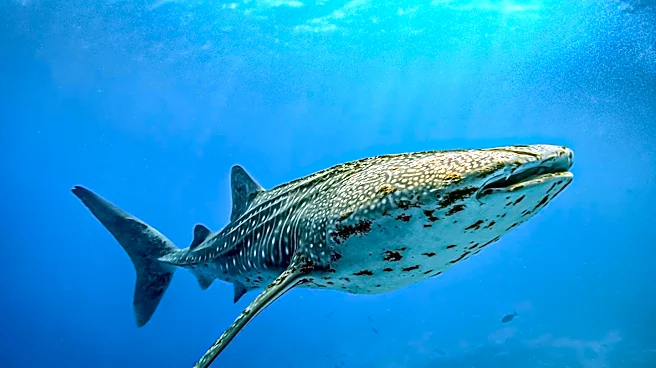
A whale shark named Milo was successfully tagged and tracked for nearly a decade, covering an astonishing distance of over 34,000 miles. This achievement marks the longest documented track of any shark, providing invaluable data for the ongoing research program focused on the endangered whale shark species. Dr. Mahmood Shivji, a shark expert and director of NSU’s Guy Harvey Research Institute, highlighted that this extensive migratory research significantly enhances the understanding of whale shark movements and is crucial for their conservation efforts. The findings were recently featured by Forbes, bringing broader attention to this remarkable scientific endeavor and the importance of protecting marine life.
Why It's Important?
This record-breaking tracking of Milo the whale shark is profoundly important for marine conservation and scientific understanding. Whale sharks are an endangered species, and comprehensive data on their migratory patterns is critical for developing effective conservation strategies. Knowing their travel routes, feeding grounds, and breeding areas allows conservationists to identify and protect crucial habitats, mitigate threats from shipping lanes, fishing activities, and pollution, and inform international policy decisions. The sheer distance covered by Milo underscores the vastness of their migratory range and the interconnectedness of global marine ecosystems. This research provides a baseline for understanding the species' resilience and vulnerability to environmental changes, including climate change and ocean acidification. For the scientific community, this long-term tracking project demonstrates the power of collaborative research and advanced tagging technologies in unraveling the mysteries of marine megafauna, ultimately contributing to the broader goal of preserving ocean biodiversity.
What's Next?
The successful tracking of Milo the whale shark is expected to catalyze further research into whale shark migration and behavior. Researchers will likely analyze the extensive data collected to identify specific migratory corridors, seasonal patterns, and potential environmental triggers for these long-distance journeys. This information will be crucial for informing conservation policies and establishing marine protected areas that align with the whale sharks' movements. The collaborative team, including the Guy Harvey Foundation and NSU’s Guy Harvey Research Institute, will likely continue their tagging efforts, potentially deploying more advanced tags to gather even more detailed data on depth, temperature, and other environmental factors. The public awareness generated by this record-breaking achievement may also lead to increased funding for marine research and conservation initiatives. Furthermore, the insights gained could be applied to the study and protection of other migratory marine species, fostering a more comprehensive approach to ocean conservation on a global scale.
Beyond the Headlines
The story of Milo the whale shark transcends a mere scientific record; it offers a profound glimpse into the hidden lives of one of the ocean's most magnificent creatures and underscores humanity's role in its survival. The nearly decade-long tracking effort highlights the dedication and patience required for long-term ecological research, emphasizing that understanding complex natural systems demands sustained commitment. Ethically, this research reinforces the imperative to protect endangered species, reminding us of the intrinsic value of biodiversity and the moral responsibility to prevent extinctions. Culturally, the narrative of Milo's epic journey can inspire a deeper appreciation for marine life and foster a sense of global stewardship for our oceans. It also subtly points to the advancements in technology that enable such detailed tracking, showcasing how innovation can serve conservation. Ultimately, Milo's record-breaking migration is a powerful testament to the wonders of the natural world and a call to action for continued efforts to safeguard these vulnerable giants of the deep.