






What's Happening?
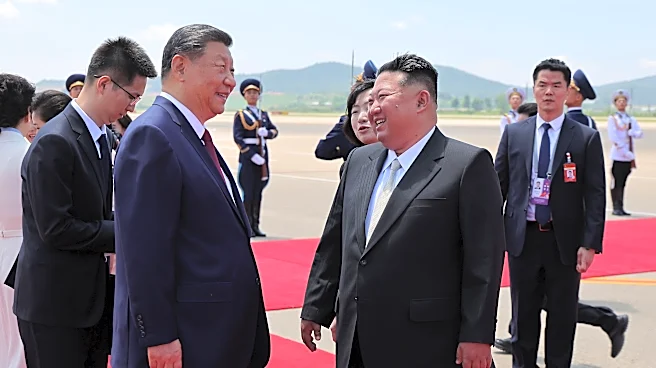
Chinese President Xi Jinping's recent summit with North Korean leader Kim Jong Un did not address North Korea's nuclear weapons program, a notable omission given the historical context of denuclearization talks. This silence marks a shift from previous
Chinese positions that advocated for denuclearization of the Korean Peninsula. Analysts suggest that Xi's approach may reflect a strategic decision to prioritize regional stability over direct pressure on North Korea to disarm. This development comes as North Korea continues to advance its nuclear capabilities, posing a challenge to U.S. and allied efforts to curb Pyongyang's nuclear ambitions.
Why It's Important?
Xi's silence on North Korea's nuclear program could have significant geopolitical implications. It may signal China's tacit acceptance of North Korea's nuclear status, complicating efforts by the U.S., South Korea, and Japan to denuclearize the Korean Peninsula. This shift could embolden North Korea, potentially leading to further nuclear advancements and increased regional tensions. For the U.S. and its allies, China's stance may necessitate a reevaluation of diplomatic and military strategies in the region, as they seek to counterbalance North Korea's growing nuclear threat.
Beyond the Headlines
The strategic implications of China's position extend beyond immediate regional security concerns. By not addressing North Korea's nuclear program, China may be positioning itself as a key player in future negotiations, leveraging its influence over Pyongyang to gain diplomatic advantages. This approach could also reflect China's broader geopolitical strategy to maintain stability in its sphere of influence while countering U.S. presence in Asia. The long-term impact of this development could reshape power dynamics in the region, affecting international relations and security policies.