



What's Happening?
U.S. Representative Brendan Boyle, a Democrat from Philadelphia, has announced his intention to introduce legislation to establish a federal commission. This commission will be tasked with planning the celebration of the 250th anniversary of the U.S. Constitution,
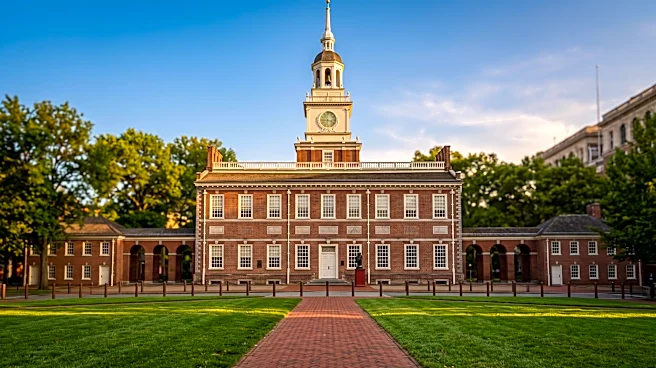
which is slated for 2037. The announcement was made at the National Constitution Center in Philadelphia, a city historically significant as the drafting and signing location of the Constitution in 1787. Boyle emphasized the importance of civic education and preparing adequately for this significant historical milestone. The initiative follows Philadelphia's recent celebrations for America's 250th anniversary, with Boyle noting that the planning for the Constitution's semiquincentennial should begin without delay to ensure a comprehensive and impactful commemoration. Vince Stango, interim president and CEO of the National Constitution Center, supported the early planning, envisioning a 'civic decade' leading up to 2037 dedicated to understanding the foundational document.
Why It's Important?
This legislative effort is important for several reasons, primarily focusing on national civic engagement and historical preservation. By establishing a federal commission, the initiative aims to ensure a coordinated and impactful commemoration of a cornerstone document of American democracy. The emphasis on a 'civic decade' leading up to 2037 highlights a broader goal of fostering greater public understanding and appreciation of the Constitution's principles and its ongoing relevance. This could lead to increased educational programs, public discourse, and historical events that reinforce national identity and civic responsibility. For Philadelphia, the city where the Constitution was drafted and signed, this initiative solidifies its role as a central hub for American historical commemorations, potentially boosting tourism and local engagement. The discussion around the Constitution's anniversary also provides a platform to address contemporary debates regarding constitutional rights and interpretations, as noted by Boyle, who referenced ongoing national conversations about various constitutional issues, including executive orders and amendments.
What's Next?
The immediate next step involves U.S. Rep. Brendan Boyle formally introducing the legislation to create the federal commission. Following its introduction, the bill will proceed through the legislative process, requiring debate, potential amendments, and votes in both the House of Representatives and the Senate before it can be signed into law. If the legislation passes, the federal commission will then be established, and its members appointed. This commission will be responsible for developing a comprehensive plan for the 250th-anniversary celebrations, which will likely include educational initiatives, public events, and historical commemorations across the nation. Stakeholders such as the National Constitution Center and other historical and educational institutions are expected to play a significant role in collaborating with the commission. The planning process is anticipated to span over a decade, culminating in the 2037 anniversary, with potential interim events leading up to it, such as the 250th anniversary of the Bill of Rights in 2041, as mentioned by Vince Stango.
Beyond the Headlines
Beyond the immediate planning for a historical anniversary, this initiative carries deeper implications for national unity and civic discourse. In an era marked by significant political polarization and ongoing debates about the interpretation of constitutional rights, a concerted effort to reflect on the Constitution's origins and enduring principles could serve as a unifying force. The 'civic decade' envisioned by the National Constitution Center suggests a long-term commitment to civic education, which could help bridge ideological divides by fostering a shared understanding of the nation's foundational legal framework. This focus on historical context and constitutional literacy could empower citizens to engage more thoughtfully with contemporary issues, understanding how current events relate to the document that established America's national government and protects individual rights. Furthermore, by highlighting Philadelphia's historical significance, the initiative reinforces the city's cultural and historical identity, potentially inspiring similar regional efforts to connect local history with broader national narratives.