







What's Happening?
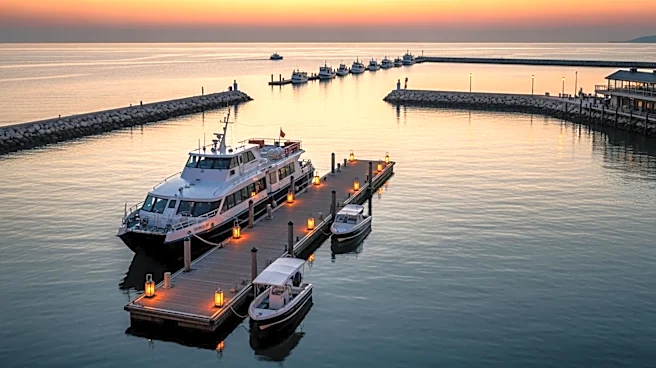
Traffic congestion in Greenport has intensified as the U.S. Open golf tournament approaches, causing significant delays for commuters using the North Ferry. The congestion, which began early Tuesday morning, saw vehicles backed up nearly a mile as they
attempted to board the ferry to Shelter Island. This situation has been exacerbated by the influx of visitors to the U.S. Open and ongoing roadwork by the Shelter Island Highway Department. Despite a recent $3.1 million project to expand the ferry's staging area from one lane to five, the traffic issues persist. Greenport Mayor Kevin Steussi highlighted that the North Fork has become a bypass for traffic heading to the Hamptons, further complicating the situation. North Ferry officials have attempted to alleviate the congestion by starting some ferry services earlier than usual.
Why It's Important?
The traffic congestion in Greenport underscores the challenges faced by local infrastructure in accommodating large-scale events like the U.S. Open. The situation highlights the need for effective traffic management strategies and infrastructure improvements to handle increased demand. The congestion not only affects local residents and commuters but also impacts businesses and tourism in the area. The delays could deter visitors from attending events, potentially affecting local economic activity. Additionally, the situation raises questions about the effectiveness of recent infrastructure investments and the need for further improvements to prevent similar issues in the future.
What's Next?
As the U.S. Open continues, traffic is expected to remain heavy, particularly during peak hours. Local authorities and ferry operators may need to implement additional measures to manage the congestion, such as adjusting ferry schedules or implementing traffic control strategies. The situation may prompt further discussions between Greenport officials and North Ferry regarding pricing models and infrastructure improvements. Long-term solutions may involve reevaluating traffic patterns and exploring alternative routes to alleviate pressure on the North Fork. The outcome of these discussions could lead to policy changes aimed at improving traffic flow and reducing congestion during major events.