






What's Happening?
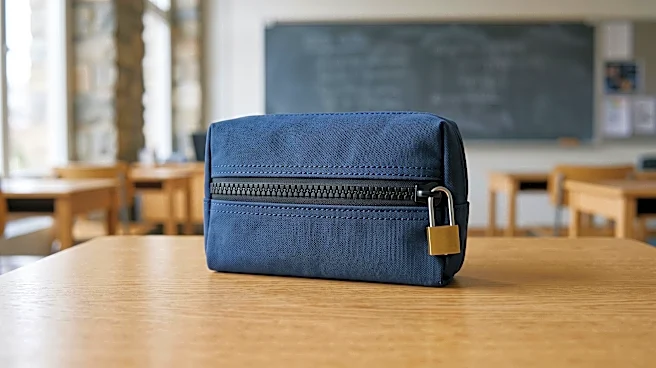
New research indicates that implementing strict cellphone bans in schools, particularly through the use of locked pouches, may lead to small but statistically significant improvements in K-12 students' math and reading scores. A study released on Tuesday,
co-authored by Harvard University's Tom Kane and Dartmouth College's Douglas Staiger, analyzed nationwide student-level test scores from over 3 million elementary, middle, and high school students over five school years. The findings suggest that these learning gains do not fade over time but rather accumulate, potentially for up to three years after the bans are implemented. This study contrasts with an earlier April study by Brian Jacob of the University of Michigan, which found 'close to zero' impact on test scores, though Jacob's study did note statistically significant gains in high school math that were offset by middle school losses. The new research posits that the rise of smartphones around 2013 coincided with a significant decline in student achievement, and cellphone bans could help reverse this trend.
Why It's Important?
The findings of this new study are significant for U.S. education policy and practice, offering evidence that a relatively simple intervention—restricting cellphone access during school hours—could help address the persistent issue of learning loss. Since 2013, U.S. students have experienced a steady decline in academic achievement, particularly in reading and math, a trend that predates the COVID-19 pandemic. If cellphone bans can indeed plug 'about half of that leak,' as suggested by Tom Kane, it presents a cost-effective strategy for schools to improve educational outcomes. The potential for cumulative gains over several years makes this approach particularly appealing. For parents, educators, and policymakers, this research provides a data-driven argument for implementing or strengthening cellphone restrictions, aiming to create a more focused learning environment and potentially reverse negative academic trends.
What's Next?
The new study's findings are likely to fuel further debate and encourage more schools to consider or adopt strict cellphone bans, possibly utilizing locked pouch systems like those from Yondr. While the April study's co-author, Tom Dee, calls for continued study due to the small and sensitive nature of the gains, the encouraging results from the latest research could prompt educational institutions to pilot or expand such programs. Researchers like Tom Kane plan to extend their studies to examine students' smartphone and social media use outside of school, which could provide a more comprehensive understanding of the factors influencing academic performance. Policymakers may also look into state-level initiatives or recommendations regarding cellphone policies in schools, potentially leading to a broader shift in how technology is managed in educational settings across the U.S.
Beyond the Headlines
The debate over cellphone bans in schools touches on broader societal issues concerning technology's impact on youth development, attention spans, and mental health. Beyond academic performance, restricting cellphone use could foster improved social interactions among students, reduce cyberbullying incidents, and enhance overall classroom engagement. The 'small but significant' gains, if they accumulate, could have profound long-term effects on students' educational trajectories and future opportunities. This issue also highlights the challenge of balancing technological integration with traditional learning methods in an increasingly digital world. The discussion extends to the role of parents in managing their children's screen time and the collective responsibility of communities to create environments conducive to learning and healthy development, suggesting a cultural shift in how society views and manages smartphone use among minors.