







What's Happening?
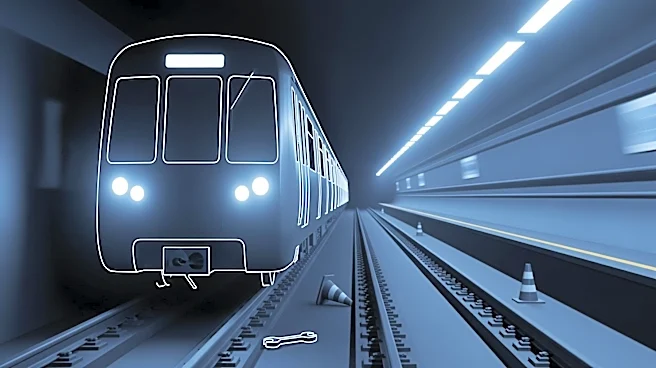
The Chicago Transit Authority (CTA) has decided to shorten the length of trains on several 'L' lines during weekends this summer. This decision, which has surprised some riders, is part of a strategy to save money and maintain train conditions. Initially,
the CTA announced that the Blue, Orange, Brown, and Purple Lines would be affected, but later clarified that only the Orange, Brown, and Purple Lines would see reduced train lengths. The CTA aims to reduce wear and tear on train cars, which can lead to service delays, and to save on energy costs. The agency has stated that this practice was common before the pandemic and is now being reintroduced as a cost-saving measure. The CTA also plans to run longer trains during major events to accommodate higher ridership.
Why It's Important?
The CTA's decision to shorten train lengths is significant as it reflects broader efforts to manage operational costs and improve service reliability. By reducing the number of train cars, the CTA aims to decrease maintenance costs and energy consumption, which could lead to long-term savings. However, this move has raised concerns among riders about potential overcrowding and service quality. The decision also highlights the challenges faced by public transportation systems in balancing budget constraints with the need to provide efficient and reliable service. The CTA's approach may influence other transit agencies facing similar financial pressures.
What's Next?
The CTA will continue to monitor the impact of shortened train lengths and adjust its strategy based on ridership patterns and feedback. The agency has indicated that it will make decisions about train lengths on a case-by-case basis, particularly during events that attract large crowds. The CTA's ongoing maintenance work, including on the Red Line, will also continue to affect service. As the summer progresses, the CTA may need to reassess its approach to ensure that service disruptions are minimized and that rider satisfaction is maintained.