






What's Happening?
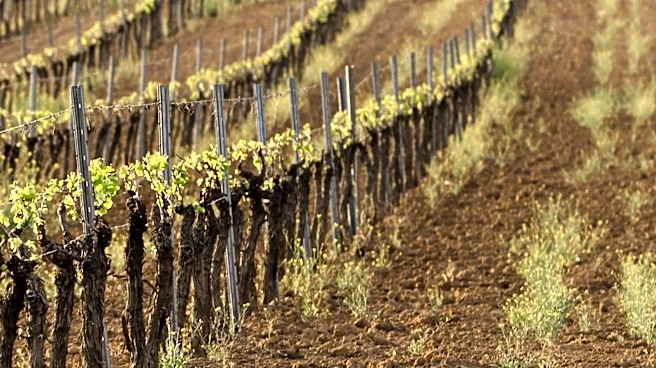
Glenn Thompson, Chairman of the House Agriculture Committee, has called for an additional $5 billion in federal assistance to support U.S. specialty crop producers. This advocacy comes amidst broader discussions on agricultural policy and land use. Thompson also
voiced concerns regarding the construction of data centers on prime agricultural land. He suggested that such facilities should instead be developed on alternative sites, specifically mentioning abandoned mine sites, to preserve valuable farmland. This position aligns with other officials who have emphasized the importance of balancing economic development with the safeguarding of agricultural resources. The push for increased aid for specialty crops highlights the economic challenges faced by this sector, while the stance on data center placement underscores a growing debate over land utilization in the U.S.
Why It's Important?
The call for $5 billion in federal aid for specialty crop producers is significant for the U.S. agricultural sector, which often faces unique challenges compared to commodity crops. Specialty crops, including fruits, vegetables, and nuts, contribute substantially to the national economy and food supply but are vulnerable to market fluctuations, climate impacts, and labor costs. This funding could provide crucial support, helping producers maintain operations, invest in new technologies, and ensure a stable supply of diverse agricultural products. Furthermore, Chairman Thompson's advocacy for locating data centers on non-prime farmland, such as abandoned mine sites, addresses a critical land-use issue. The rapid expansion of data centers, driven by technological advancements, often competes with agriculture for land. Protecting prime farmland is vital for long-term food security, environmental sustainability, and the economic viability of rural communities. This approach seeks to foster economic growth through data center development without compromising essential agricultural resources, benefiting both the tech industry and the farming community by promoting responsible land stewardship.
What's Next?
The proposal for $5 billion in specialty crop assistance will likely be a key point of discussion in upcoming legislative sessions concerning agricultural funding and the next Farm Bill. Lawmakers and agricultural stakeholders will need to evaluate the scope and allocation of these funds, considering the diverse needs of specialty crop producers across different regions. Concurrently, the debate over data center placement is expected to intensify. Chairman Thompson's suggestion of utilizing abandoned mine sites could prompt further exploration into alternative land development strategies for industrial infrastructure. This may involve collaboration between federal agencies, state governments, and private developers to identify suitable locations and develop incentives for non-agricultural site utilization. The coming months will likely see legislative efforts to incorporate these considerations into policy, potentially leading to new guidelines for land use and agricultural support programs. Stakeholders, including farming associations, environmental groups, and technology companies, will likely engage in advocacy to shape these policies.
Beyond the Headlines
The discussion around specialty crop funding and data center placement touches upon deeper implications for the future of U.S. agriculture and rural development. The emphasis on specialty crops reflects a broader shift towards diversified agriculture and consumer demand for healthier, locally sourced foods. Adequate support for this sector can enhance food system resilience and reduce reliance on imports. The debate over data center location highlights the tension between technological advancement and environmental preservation. As the digital economy expands, the energy and land footprint of data centers will continue to grow. Proposing abandoned mine sites for development offers a potential model for repurposing industrial brownfields, turning environmental liabilities into economic assets. This approach could set a precedent for sustainable industrial development, encouraging innovative solutions for infrastructure growth that minimize ecological impact and protect vital natural resources. It also underscores the ethical responsibility of industries to consider their footprint on agricultural landscapes and local communities.