



What's Happening?
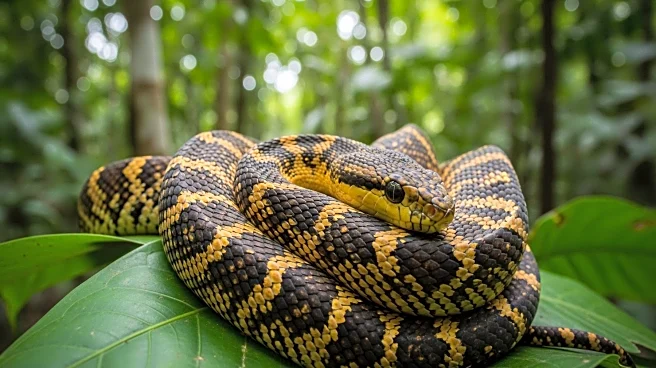
A new species of wolf snake has been discovered in the Great Nicobar Islands, India, and named Irwin's wolf snake (Lycodon irwini) in honor of the late Steve Irwin. Researchers from Pondicherry University and the Max Planck Institute for Biology identified
the species, which is non-venomous and preys on small vertebrates. The snake's discovery highlights the rich biodiversity of the Andaman and Nicobar region, an area known for its unique wildlife. The species' limited range on Great Nicobar Island raises conservation concerns, prompting recommendations for it to be classified as Endangered.
Why It's Important?
The discovery of Irwin's wolf snake underscores the ongoing need for biodiversity research and conservation efforts in underexplored regions. Naming the species after Steve Irwin pays tribute to his contributions to wildlife education and conservation, inspiring future generations to appreciate and protect lesser-known species. The identification of new species also emphasizes the importance of preserving fragile ecosystems, as species with limited ranges are particularly vulnerable to environmental changes and human activities.
What's Next?
Conservationists and researchers will likely focus on monitoring the population and habitat of Irwin's wolf snake to ensure its protection. Efforts may include habitat preservation initiatives and further studies to understand the ecological role of the species. The discovery may also encourage additional exploration and research in the Andaman and Nicobar Islands, potentially leading to the identification of more undiscovered species.