







What's Happening?
A legal battle in the Bahamas Supreme Court is underway between rival resort developers, with the habitat of the U.S.-listed threatened queen conch caught in the middle. Miami-based Yntegra Group plans to dredge approximately 1.26 acres of North Bay at East
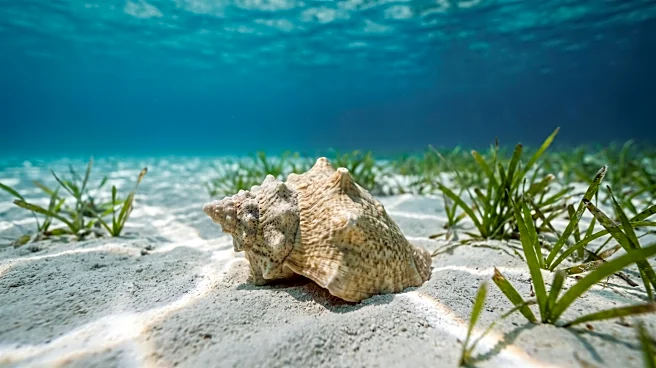
Sampson Cay for a service dock for its Rosewood Exuma resort. Two neighboring developers, Turtlegrass Resort & Island Club and Over Yonder Cay, have filed a lawsuit to overturn the project's environmental approvals, arguing that the public consultation process was flawed and the project's combined environmental effects were not adequately assessed. Scientists from Shedd Aquarium have identified the area as a significant nursery for juvenile conch, recording one of the highest densities in a 2019 survey. The court's decision will focus on the legality of the project's approval process, not directly on the harm to the conch.
Why It's Important?
This case has significant implications for environmental conservation and development practices, particularly for species listed as threatened by the U.S. The queen conch, listed as threatened by NOAA Fisheries in 2024, faces overfishing as its primary threat, but habitat destruction, as proposed by the dredging, further jeopardizes its recovery. The dispute highlights the challenges of balancing economic development with ecological preservation, especially in sensitive marine ecosystems critical for biodiversity. The outcome could influence how environmental impact assessments are conducted and how thoroughly public and scientific input is integrated into development approvals in the Bahamas, a popular destination for U.S. tourists and developers. For U.S. conservation efforts, the protection of queen conch nurseries in the Bahamas is crucial, as the species' health in the wider Caribbean directly impacts its potential recovery in U.S. waters, such as Florida, where commercial and recreational harvesting has been closed for decades due to population decline.
What's Next?
Justice Leif Farquharson has temporarily halted dredging and other works in North Bay until a decision is reached, which is expected within weeks. The court will determine if the Bahamian government lawfully approved the project, specifically addressing concerns about the consultation process and the assessment of combined environmental impacts. If Turtlegrass's challenge fails, they are liable for $3 million in security to cover Yntegra's losses. Regardless of the court's ruling, the dredging still requires further sign-off from environmental authorities. Turtlegrass has also appealed the planning approval, with a decision from the appeals board anticipated by the end of the year. The ongoing legal proceedings and scientific scrutiny will continue to shape the future of development in this ecologically sensitive region and could set precedents for environmental protection in the Bahamas and potentially influence U.S. policy on protecting threatened marine species in international waters.
Beyond the Headlines
This legal battle extends beyond a simple land dispute, revealing the complex interplay of economic interests, environmental science, and international conservation efforts. The case underscores the vulnerability of marine ecosystems to coastal development and the critical role of scientific research in informing conservation decisions. The queen conch's struggle for survival in the face of habitat destruction highlights the interconnectedness of global ecosystems and the transboundary nature of species conservation. It also brings to light the ethical considerations for developers and governments in prioritizing short-term economic gains over long-term ecological health and biodiversity. The involvement of U.S.-based researchers and the U.S. threatened species listing emphasize the broader international responsibility to protect shared natural resources, prompting a re-evaluation of sustainable development practices in popular tourist destinations and their impact on global marine life.