

What's Happening?
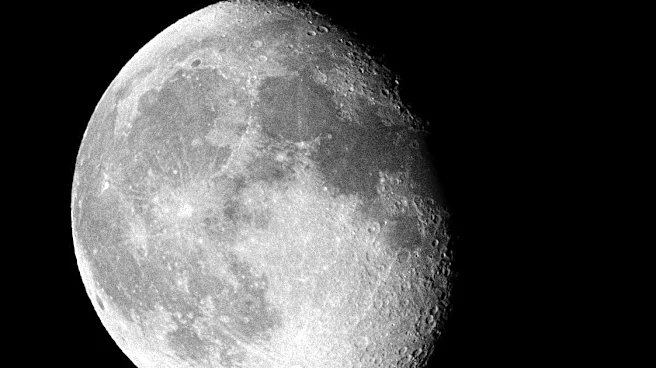
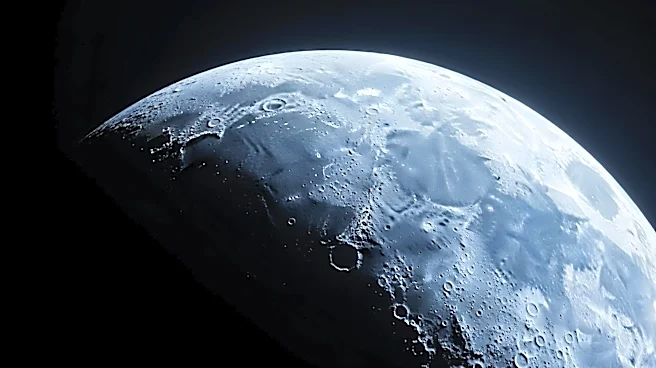
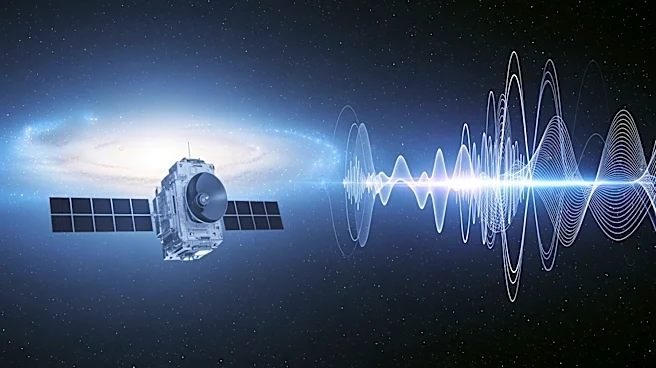
The Chandrayaan-2 mission, utilizing its Dual Frequency Synthetic Aperture Radar (DFSAR), has identified potential subsurface ice in the lunar South Polar Region. Scientists from the Physical Research Laboratory in Ahmedabad conducted the study, focusing
on 'doubly shadowed craters' within permanently shadowed regions of the Moon. These areas, shielded from sunlight, maintain extremely low temperatures, making them ideal for preserving water-ice. The study used advanced radar polarimetric analysis to detect radar signatures indicative of subsurface ice, proposing a refined criterion for identification based on Circular Polarization Ratio and Degree of Polarization values.
Why It's Important?
The discovery of subsurface ice on the Moon has significant implications for future lunar exploration and potential resource utilization. Identifying ice-bearing regions is crucial for planning future missions, as water is a vital resource for sustaining human presence and supporting in-situ resource utilization activities. This finding enhances our understanding of lunar polar volatiles and could influence the selection of landing sites for future missions. The ability to utilize lunar resources could reduce the cost and complexity of space exploration, making long-term lunar habitation more feasible.