



What's Happening?
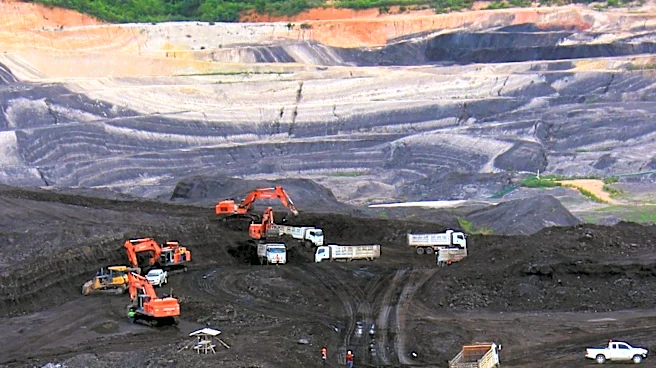
New testimonies are challenging the official account of a 1975 mining explosion in Fígols, Spain, which killed 30 workers. The company, Carbons de Berga, is accused of constructing a narrative that shifted blame onto the deceased miners to avoid responsibility.
Josep Vilalta, a survivor, recounted the immediate aftermath of the firedamp explosion, describing a lack of light and unbreathable air. The official version claimed the mine was not prone to firedamp and suggested a cigarette caused the blast, despite evidence to the contrary. Former employees and victims' families assert that the company knew about the presence of firedamp and that ventilation systems were often non-operational, directly contributing to the gas accumulation. The company's director at the time, Manuel Portis, described the incident as a "regrettable misfortune" and denied negligence, a stance supported by a former general manager who prefers anonymity. However, miners like Vilalta and Joan Segado, who participated in the rescue, contradict these claims, stating that fans were stopped.
Why It's Important?
This re-examination of the Fígols mining tragedy highlights critical issues concerning corporate accountability, worker safety, and the manipulation of narratives following industrial disasters. The alleged efforts by Carbons de Berga to deflect blame onto its deceased workers underscore a historical pattern where powerful entities prioritize their image and financial interests over human lives. For U.S. industries, this case serves as a stark reminder of the importance of stringent safety regulations and transparent investigations into workplace accidents. It emphasizes the need for robust legal frameworks that prevent companies from exploiting their influence to evade responsibility. The long-term struggle of the victims' families for truth and justice resonates with similar battles fought by communities affected by industrial incidents in the U.S., where the power imbalance between corporations and individuals often complicates the pursuit of accountability. This case also brings to light the ethical implications of corporate conduct and the societal impact when justice is delayed or denied.
What's Next?
While the article does not explicitly state immediate next steps for the Fígols case, the emergence of new testimonies suggests a renewed push for truth and acknowledgment from the victims' families. Cristina Villalonga, daughter of a victim, emphasizes that the goal is not to reopen the case legally but to achieve an admission of negligence from the company. This pursuit of moral and historical justice could lead to further public discourse, potentially inspiring similar re-evaluations of past industrial accidents where corporate responsibility was obscured. The ongoing revelations might also prompt academic or journalistic investigations into the broader context of industrial safety and corporate ethics during that era in Spain. The former lawyer for Carbons de Berga, Josep Maria Antràs, acknowledges that he would likely lose such a trial today, indicating a shift in legal and societal perspectives on corporate accountability. This evolving understanding could influence future legal interpretations and corporate governance standards, even if the Fígols case itself remains legally closed.
Beyond the Headlines
The Fígols tragedy transcends a simple accident, revealing deeper ethical and societal implications. The company's alleged strategy of blaming the victims, particularly by suggesting a cigarette caused the explosion, represents a profound moral failing that sought to dehumanize the deceased and absolve itself of culpability. This tactic not only inflicted further pain on grieving families but also perpetuated a culture where corporate negligence could be masked by manufactured narratives. The case highlights the enduring power of institutional influence, as Carbons de Berga, backed by Fecsa, was able to leverage its resources to secure a favorable outcome in the legal system of the time, including offering settlements in exchange for dropping charges. This 'David versus Goliath' struggle, as described by a victim's daughter, underscores the systemic challenges faced by ordinary citizens when confronting powerful corporations. The long-term impact includes a lingering sense of injustice for the families and a historical record that, until now, has been incomplete. The new testimonies offer a chance to correct this historical narrative, emphasizing the importance of truth and accountability, even decades after an event.