
What's Happening?
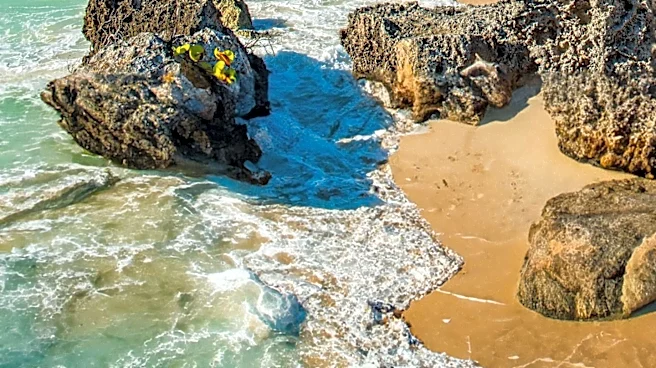
Tulum, a pre-Columbian Mayan walled city in the Mexican state of Quintana Roo, remains a significant tourist destination. Situated on 12-meter-tall cliffs along the Caribbean Sea, Tulum was a major port
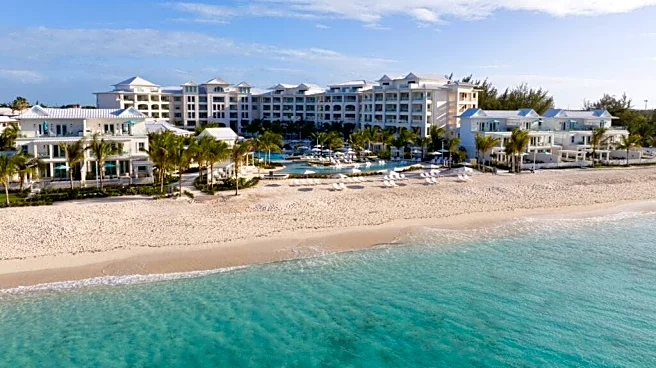
for Coba and one of the last cities built and inhabited by the Maya, reaching its peak between the 13th and 15th centuries. Although the city was abandoned by the end of the 16th century, approximately 70 years after the Spanish began exploring Mexico, its well-preserved ruins continue to draw visitors. Beyond its archaeological significance, Tulum offers modern amenities, including hotels like the 5-star Arka Tulum Hotel, which features an outdoor pool and restaurant, and beach clubs such as Sana Tulum's, providing an adults-only experience with food and beverage service. The area also boasts natural attractions like cenotes and beaches, making it a diverse destination for travelers.
Why It's Important?
Tulum's enduring popularity highlights the economic importance of cultural heritage and natural beauty in the tourism sector. For Mexico, and specifically the state of Quintana Roo, tourism to sites like Tulum generates substantial revenue, supports local economies, and creates employment opportunities. The blend of ancient history with modern hospitality services caters to a wide range of tourists, from those interested in archaeological exploration to those seeking relaxation and luxury. The continued preservation and promotion of these sites are crucial for sustaining this economic engine. Furthermore, the development of diverse offerings, such as adults-only beach clubs and family-friendly options, demonstrates a strategic approach to maximizing tourist appeal and ensuring a broad market reach, contributing to the region's overall economic stability and growth.
What's Next?
The future of Tulum will likely involve continued efforts to balance tourism development with the preservation of its historical and natural resources. As its popularity grows, there will be an ongoing need for sustainable tourism practices to protect the delicate ecosystems and archaeological sites. Investment in infrastructure, such as hotels and transportation, will probably continue to accommodate increasing visitor numbers. Local authorities and tourism operators will need to collaborate to ensure that the economic benefits of tourism are distributed equitably and that the cultural integrity of the region is maintained. The focus will remain on enhancing the visitor experience while safeguarding the unique heritage and environment that make Tulum a distinctive destination.
Beyond the Headlines
The story of Tulum extends beyond its current tourist appeal, touching upon the broader themes of cultural legacy and the impact of historical civilizations. The Mayan civilization, which built Tulum, represents a sophisticated society with advanced knowledge in astronomy, architecture, and urban planning. The ruins serve as a tangible link to this rich past, offering insights into pre-Columbian life and trade networks. The abandonment of Tulum in the 16th century, following the arrival of the Spanish, also underscores the profound historical shifts brought about by colonial expansion. Today, Tulum stands as a testament to resilience and adaptation, where ancient history coexists with contemporary life, prompting reflection on how societies evolve and how their legacies are preserved and interpreted for future generations.