

What's Happening?
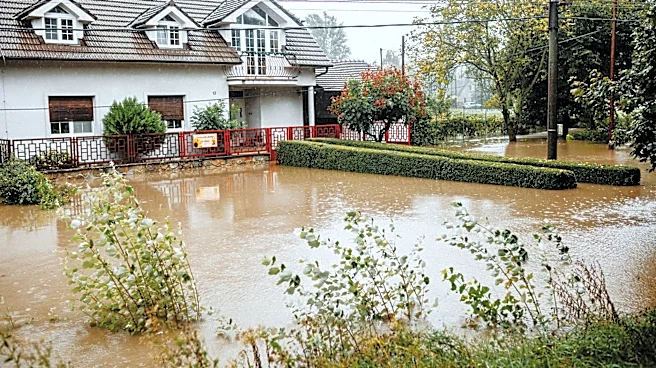
An intense drizzle in the capital city of Peru has led to the collapse of sewers and significant flooding in Villa El Salvador, specifically in group 1, sector 1. This has resulted in a lagoon of sewage water, directly impacting local families and their
homes. Residents are actively working to prevent further damage to their properties. Reports from RPP's Rotafono also indicate widespread water accumulation on streets and roads near Line 1 of the Lima Metro, causing traffic disruptions. One resident in sector 1 of Villa El Salvador has urgently requested Luz del Sur to cut off electrical power in her block to avert potential tragedies, citing a previous instance where she had to request a power cut due to similar conditions. Sedapal has announced that it is deploying hydrojet equipment to the most affected areas in Villa El Salvador to remove accumulated water and has advised the public against independently removing manhole covers.
Why It's Important?
The flooding and sewer collapse in Villa El Salvador highlight critical infrastructure vulnerabilities in urban areas, particularly concerning drainage systems and public utilities. Such events pose immediate health risks to residents due to exposure to sewage water and can lead to significant property damage, displacing families and incurring substantial repair costs. The request for an electrical power cut underscores the potential for electrocution and other hazards when water mixes with electrical infrastructure, emphasizing the need for rapid response from utility companies. The traffic disruptions near a major public transport line like the Lima Metro also illustrate the broader economic and social impact, affecting daily commutes and potentially hindering commercial activities. This situation brings to light the challenges faced by local authorities and utility providers in maintaining and upgrading essential services to cope with environmental factors and urban growth.
What's Next?
Sedapal has already initiated efforts by deploying hydrojet equipment to clear the accumulated water in Villa El Salvador. The immediate focus will be on mitigating the current flooding and restoring sanitation services. Local residents will likely continue their efforts to protect their homes while awaiting further assistance from municipal and utility services. Luz del Sur will need to address the resident's request for an electrical power cut to ensure public safety, potentially requiring a review of their emergency response protocols for such situations. In the longer term, this incident may prompt a re-evaluation of the drainage and sewer infrastructure in Villa El Salvador and other vulnerable areas, potentially leading to investments in upgrades and maintenance to prevent future occurrences. Authorities may also consider implementing better early warning systems and community preparedness programs for heavy rainfall events.
Beyond the Headlines
This incident in Villa El Salvador extends beyond immediate infrastructure failure, touching upon deeper issues of urban planning, social equity, and governance. The resident's struggle to get an electrical cut due to bureaucratic hurdles (her father's name on the bill) highlights systemic inefficiencies and the human cost of rigid administrative processes, particularly for vulnerable populations. The recurring nature of such flooding, as implied by the resident's previous request for a power cut, suggests a chronic underinvestment in resilient urban infrastructure. This situation can exacerbate existing social inequalities, as lower-income neighborhoods often bear the brunt of inadequate public services and are more susceptible to environmental hazards. The event also raises questions about the effectiveness of local government in anticipating and responding to climate-related challenges, which are likely to intensify. Addressing these issues requires not just technical solutions but also comprehensive policy reforms that prioritize equitable urban development and responsive public administration.