


What's Happening?
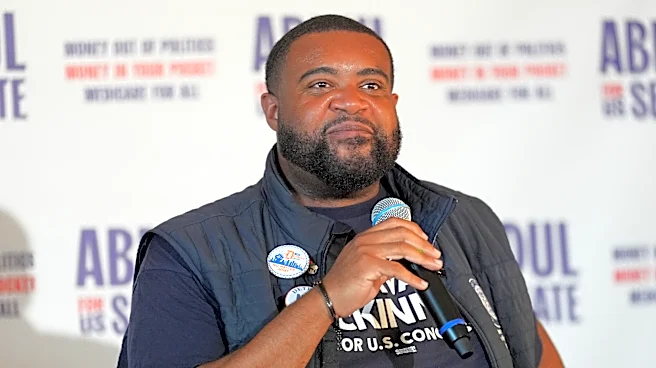
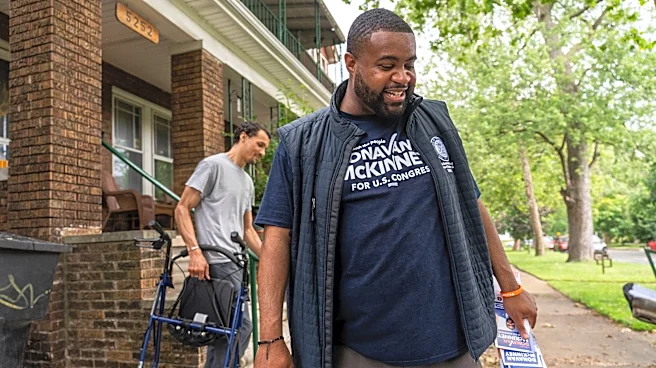
Indian-American Congressman Shri Thanedar has lost the Democratic primary for Michigan's 13th District to Donavan McKinney, a candidate supported by the Democratic Socialists of America (DSA). McKinney won by a margin of 3.79%, securing 51.9% of the votes
compared to Thanedar's 48.1%. This outcome highlights the growing influence of the DSA within the Democratic Party. Thanedar's defeat means that the representation of Indian-Americans in the U.S. House of Representatives is expected to decrease from six to four, assuming other Indian-American lawmakers like Ro Khanna, Ami Bera, Pramila Jayapal, and Suhas Subramanyam win their respective elections in November.
Why It's Important?
The loss of Shri Thanedar in the primary election signifies a shift in the political landscape within the Democratic Party, with the DSA gaining more influence. This could lead to changes in policy priorities and legislative approaches within the party. Additionally, the reduction in Indian-American representation in Congress may impact the advocacy and legislative focus on issues pertinent to the Indian-American community. The outcome also reflects broader trends in U.S. politics where progressive candidates are increasingly challenging established moderates, potentially reshaping the party's future direction.
What's Next?
With McKinney now the Democratic nominee, the focus will shift to the general election in November, where he will compete to represent Michigan's 13th District in the House of Representatives. The Democratic Party may need to address the internal dynamics between its moderate and progressive wings to maintain unity and electoral success. For the Indian-American community, the upcoming elections will be crucial in determining their continued representation and influence in Congress.