



What's Happening?
The city of Los Angeles has implemented a new adaptive reuse ordinance that facilitates the conversion of empty commercial buildings into residential apartments. This ordinance, effective this month, allows buildings as young as 15 years old to be converted
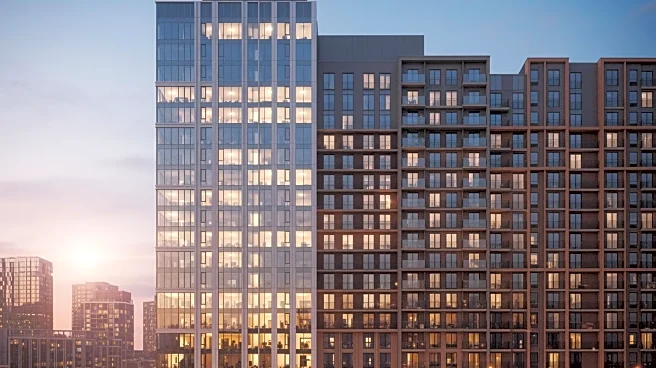
into housing with city staff approval, bypassing the lengthy review processes previously required. This change is expected to address both the housing shortage and the high office vacancy rates in the city. Developer Garrett Lee has already begun converting an office high-rise into nearly 700 apartments, highlighting the ordinance's potential to transform underutilized spaces into much-needed housing. The ordinance builds on a 1999 guideline that initially focused on downtown Los Angeles, expanding the scope to include various commercial districts across the city.
Why It's Important?
The new ordinance is significant as it addresses two critical issues facing Los Angeles: the housing shortage and the surplus of vacant office spaces. By streamlining the conversion process, the city aims to increase the housing supply, potentially stabilizing or reducing rental prices. This move could also revitalize commercial areas by increasing residential density, thereby boosting local economies. Developers like Garrett Lee see this as a monumental change that removes significant risks associated with lengthy approval processes, making housing projects more feasible. The ordinance could serve as a model for other cities facing similar challenges, promoting urban renewal and efficient use of existing infrastructure.
What's Next?
As the ordinance takes effect, developers are expected to accelerate conversion projects, particularly in areas previously excluded from adaptive reuse guidelines. The city may also consider additional financial incentives to further encourage conversions, similar to programs in other major cities like New York and San Francisco. These incentives could include tax abatements or grants to offset construction costs. The success of this initiative could lead to further policy developments aimed at addressing urban housing challenges, potentially influencing national trends in urban planning and development.